When furnishing a commercial space, table tops often receive the most attention, but the table base is what determines stability, safety, comfort, and long-term performance. In restaurants, cafés, lounges, and hospitality venues, the wrong base choice can lead to wobbling tables, restricted legroom, or premature wear. Selecting the correct table base is not just about appearance—it is about functionality, proportions, and how the table will be used in daily operations.
Commercial tables are exposed to constant movement, guests leaning on edges, staff repositioning furniture, and frequent cleaning. A properly matched base ensures the table remains stable under these conditions while maintaining a comfortable seating experience. Choosing the right base also helps maximize seating efficiency and maintain clear aisle space, which is critical in high-traffic environments.
One of the most important considerations is weight compatibility. The base must be heavy enough to support the table top and prevent tipping. Heavier surfaces such as solid wood, stone, or thick laminate tops require more substantial bases to keep the center of gravity balanced. Lightweight bases paired with heavy tops are a common cause of wobble and instability in commercial dining settings.
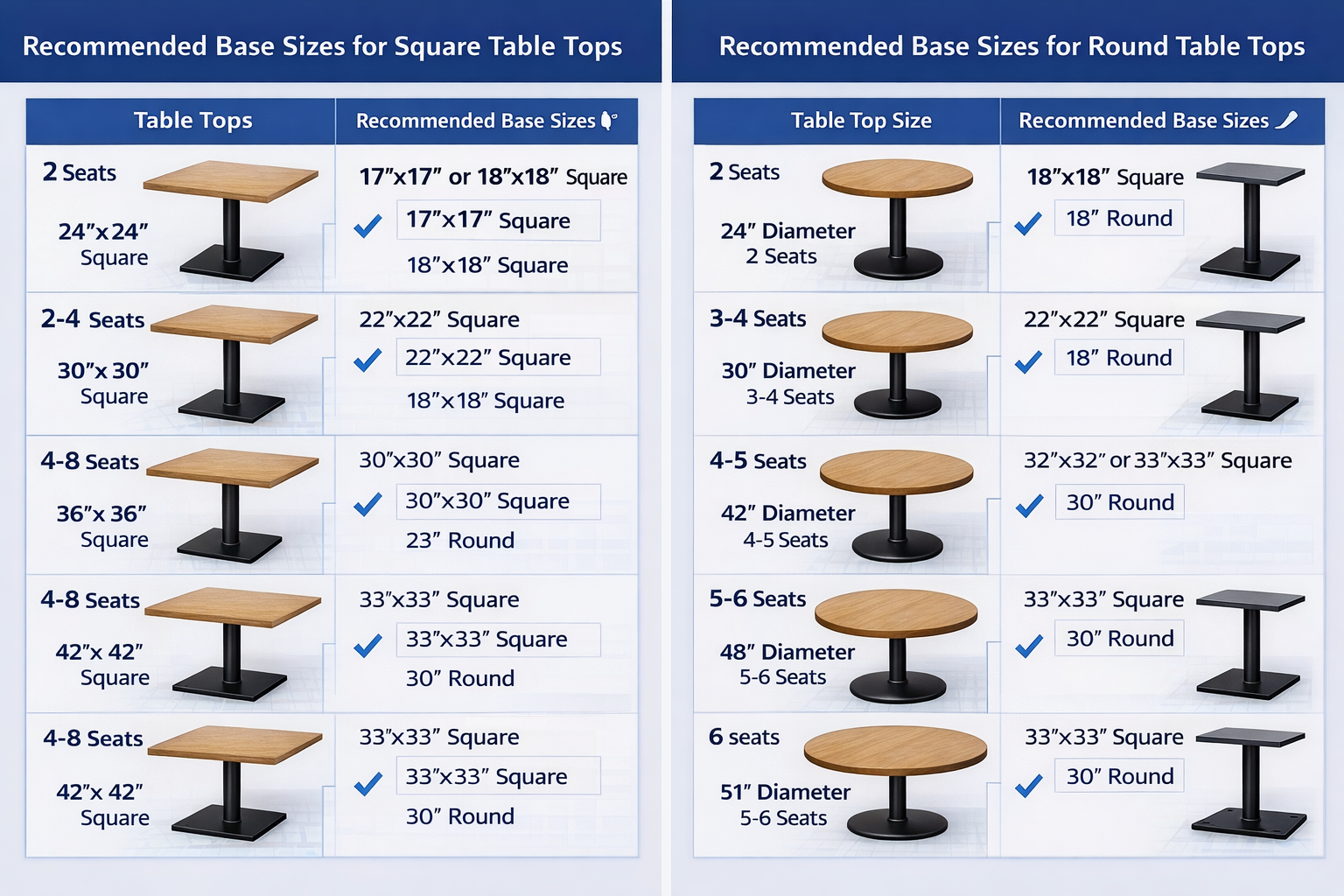
Base footprint and proportions are equally important. For round tables, the base diameter should be at least half the diameter of the table top to provide proper balance. For square and rectangular tables, the base—or combination of bases—should cover approximately two-thirds of the table length. This ensures even weight distribution and prevents rocking when guests apply pressure to the edges.
Material selection also plays a major role in base performance. Cast iron bases are widely used for indoor dining because of their weight and durability. Stainless steel bases are preferred in moisture-prone or food-service environments due to their corrosion resistance. Aluminum bases are lightweight and rust-resistant, making them ideal for outdoor patios or layouts that require frequent reconfiguration.
Table height must always match the intended use. Dining-height tables typically range from 28" to 30", counter height from 34" to 36", and bar height from 40" to 42". Selecting the wrong height affects comfort, chair compatibility, and overall usability. In some environments, base style also matters—disc bases provide classic stability, cross bases allow chairs to tuck in closer, and double T-style bases are essential for long rectangular tables.
Frequently asked questions.Q: Why is the table base just as important as the table top?
A: The base provides structural support and stability. An undersized or lightweight base can cause wobbling or tipping, especially in high-traffic commercial environments.
Q: How do I know if a table base is heavy enough?
A: The base must be compatible with the weight of the table top. Heavier tops such as solid wood or stone require heavier bases to maintain balance and prevent movement.
Q: How should the base size relate to the table top size?
A: For round tables, the base diameter should be at least 50% of the table diameter. For square or rectangular tables, the base length should be roughly two-thirds the length of the top.
Q: What table base materials are best for commercial use?
A: Cast iron is ideal for indoor durability, stainless steel works best in moisture-prone areas, and aluminum is well suited for outdoor or flexible layouts.
Q: When should specialty bases like bolt-down or wall-mounted bases be used?
A: Bolt-down bases are ideal for permanent, wobble-free installations in public spaces, while wall-mounted or cantilever bases are used to maximize legroom and simplify cleaning.
Q: Which table bases are best for ADA compliance?
A: For ADA-compliant seating, tables must provide clear knee and toe clearance for wheelchair users. Using two single-leg bases on a 30" × 48" table top is often the best solution, as this configuration creates open access between the legs and allows sufficient clearance underneath the table while maintaining stability and proper support.
Choosing the right table base ensures safety, comfort, and long-term performance while supporting the overall layout and design intent of the space.