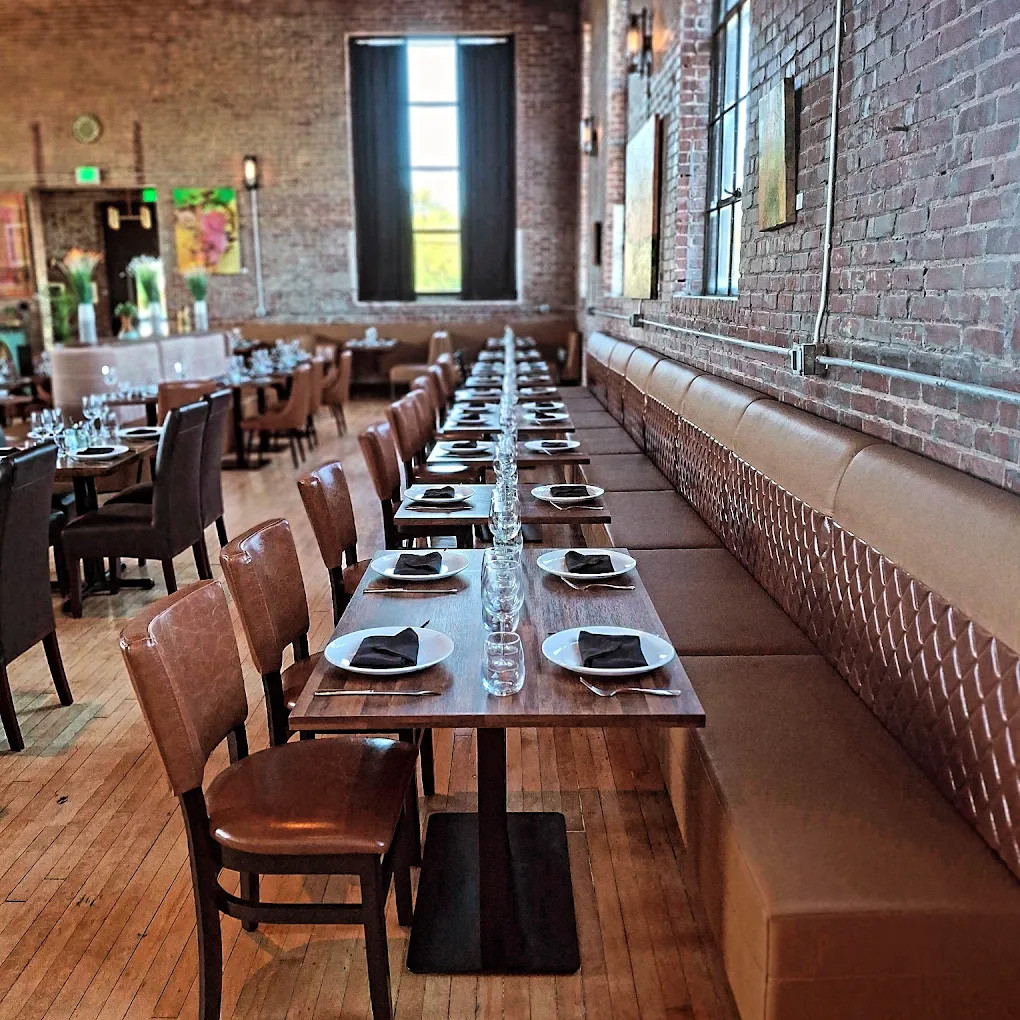
The 2026 Restaurant Furniture & Interior Guide
A Real-World Story of Design, Flow, and Smarter Decisions
Every year, right after the last major trade shows wrap up and the sketches are rolled back into tubes, restaurant owners ask the same question:
“What actually works next year?”
Not what looks good on Instagram.
Not what was trendy five years ago.
But what will still make sense — operationally and financially — in 2026.
After walking hundreds of dining rooms, reviewing countless floor plans, and watching restaurants succeed (or struggle) based on their layout and furniture choices, one thing has become very clear:In 2026, furniture is no longer a simple decoration.It is infrastructure.
Where the 2026 Shift Really Begins
The biggest change heading into 2026 isn’t a color, a fabric, or a finish. It's the mindset.
Restaurant interiors are being designed backward — starting with movement, not mood. Owners are paying closer attention to how guests enter, how servers circulate, where bottlenecks form, and how long people actually stay seated.
Furniture decisions are now tied directly to:
-
Guest dwell time
-
Table turnover
-
Staffing efficiency
-
Long-term maintenance costs
This is why modular layouts, flexible seating, and commercial-grade construction are no longer “nice to have.” They’re essential.
The Question Every Restaurant Asks First
Almost every conversation starts the same way:
“How many seats can we fit?”
In 2026, the smarter question is:
“How many seats can we fit comfortably — without slowing service or hurting the experience?”
A reliable planning rule still applies:
-
15–20 square feet per guest, using only the usable dining area
But what’s changed is how that number is interpreted.
Restaurants chasing speed and turnover tend to land closer to 15 sq ft per guest.
Concepts focused on experience, alcohol sales, or premium dining lean toward 18–20 sq ft per guest.
The mistake happens when owners push beyond those limits — creating tight aisles, crowded tables, and stressed staff. The result is almost always slower service and lower check averages.
Walking the Floor: Why Spacing Matters More Than Ever
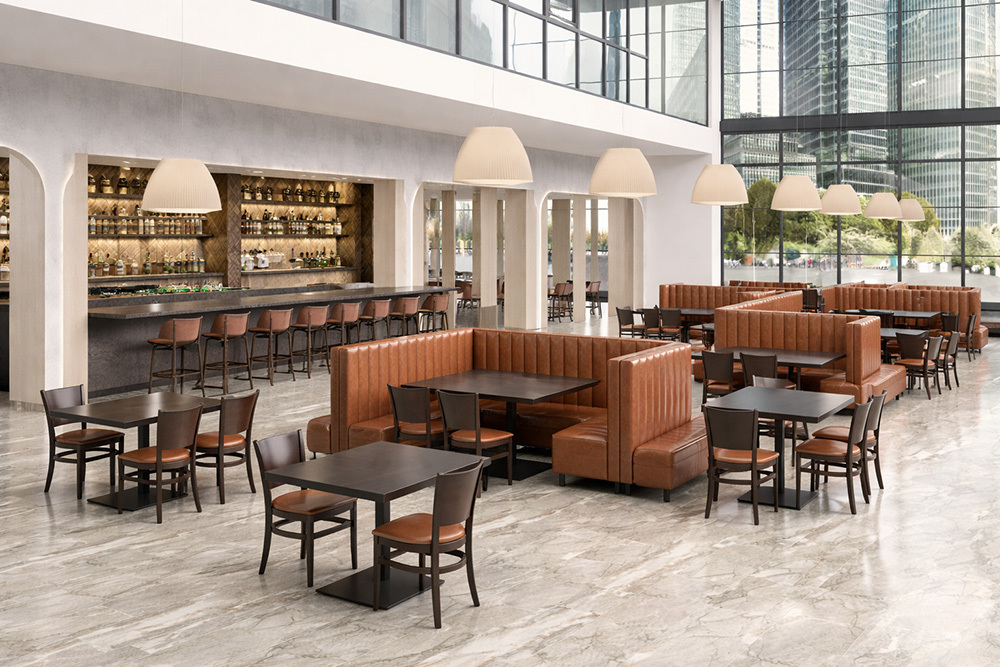
In 2026, spacing is no longer a suggestion — it’s a requirement.
Guests notice when chairs bump.
Servers feel it when aisles tighten.
And inspectors certainly don’t ignore it.
The layouts that perform best consistently follow these standards:
-
36 inches for main walkways
-
18 inches between seated guests
-
24 inches per bar stool
-
Clear, uninterrupted ADA paths
When spacing is respected, the dining room feels calmer — even when it’s full. That calm translates directly into longer stays and higher spend.
The Return (and Evolution) of Booth Seating
Walk into most high-performing restaurants today and one thing stands out immediately:
booths are everywhere again.
But not the booths of the past.
In 2026, booths are:
-
Modular
-
Reconfigurable
-
Built to define space without walls
They quietly solve multiple problems at once. They maximize perimeter space, reduce visual clutter, create privacy, and encourage guests to stay just a little longer.
Most booths comfortably seat 2 to 6 guests, depending on length, making them ideal anchors for any floor plan. When done right, they create rhythm in the room — guiding traffic without guests even realizing it.
Tables, Chairs, and the Power of Flexibility
Rigid layouts don’t survive long in 2026.
Restaurants that perform best are the ones that can adapt — to a busy Friday night, a private event, or a sudden staffing change.
That’s why the most successful floor plans rely on:
-
A balanced mix of two-tops and four-tops
-
Tables that can be combined or separated easily
-
Chairs built for heavy use, not just looks
Overly large tables lock restaurants into one seating scenario. Flexible furniture gives operators options — and options are power.
Bar Seating: Still the Heartbeat of Revenue
Bars remain one of the strongest revenue drivers in restaurants, but only when designed correctly.
In 2026, bar seating is expected to do more:
-
Handle constant movement
-
Support heavier use
-
Stay comfortable over long periods
The layouts that work best always allow:
-
24 inches per stool
-
Clear server access behind seated guests
-
Commercial-grade stools designed for daily abuse
A crowded bar may look lively — but a functional bar keeps guests ordering.
The 60/40 Rule That Keeps Winning
Across projects of all sizes, one ratio continues to outperform the rest:
-
60% dining area
-
40% kitchen, prep, storage, restrooms, and service
When dining space overwhelms the back of the house, service slows.
When the dining room is too small, revenue is capped.
This balance keeps operations smooth and guests satisfied — especially during peak hours.
Square Footage Per Guest: What 2026 Demands
Different concepts demand different layouts, but the benchmarks remain consistent:
-
Fine Dining: 18–20 sq ft per guest
-
Full-Service Restaurants: 15–18 sq ft per guest
-
Banquet & Event Spaces: 10–12 sq ft per guest
-
Cafés & Counter Service: 10–12 sq ft per guest
These numbers aren’t arbitrary — they’re based on flow, comfort, and operational reality.
Buying Furniture in 2026: What Smart Operators Prioritize
By 2026, experienced buyers are no longer chasing the cheapest option. They’re investing in furniture that lasts.
Top priorities now include:
-
Fully commercial-grade construction
-
Modular and adaptable seating systems
-
Fire-rated materials (CAL 117)
-
Easy-to-clean, high-performance upholstery
-
Domestic manufacturing for consistency and lead-time control
Furniture is no longer a seasonal expense. It’s a long-term asset.
The Real Lesson of 2026
The restaurants that will stand out in 2026 aren’t the ones with the trendiest interiors.
They’re the ones that understand how layout, furniture, and flow work together.
When seating is planned correctly, furniture disappears into the experience — and that’s when it’s working at its best.