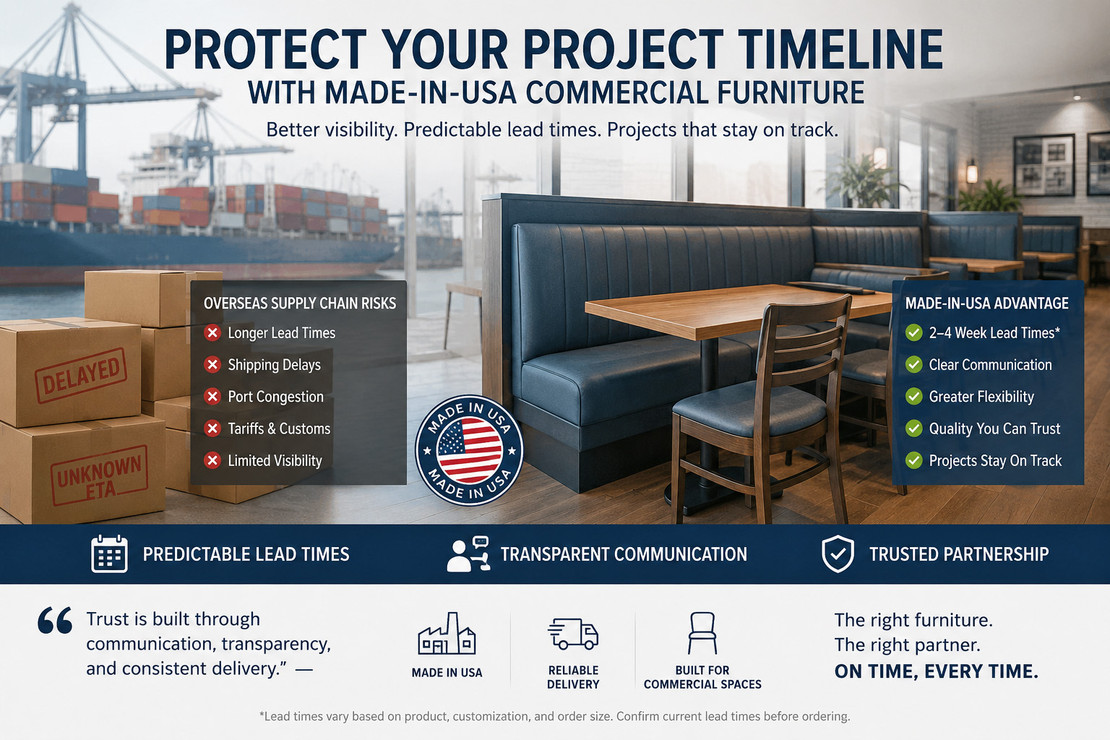
Why Made-in-USA Commercial Furniture Can Help Protect Your Project Timeline
Over the past several years, commercial furniture buyers have faced a new reality: supply chain uncertainty.
Restaurant operators, golf simulator venues, bowling centers, hospitality groups, and entertainment destinations are discovering that the success of a project depends on more than selecting the right furniture. It also depends on choosing the right manufacturing partner.
When opening dates are fixed and construction schedules are tight, delayed furniture deliveries can create costly setbacks.
Today, many buyers are asking a different question:
Where is the furniture actually being made?
Why Manufacturing Location Matters
Many commercial furniture companies rely heavily on overseas production.
While global sourcing can offer design variety and cost advantages, it can also introduce additional variables into the process:
- International shipping schedules
- Port congestion
- Tariffs and customs delays
- Inventory shortages
- Longer production timelines
- Limited visibility into manufacturing progress
When disruptions occur, project timelines can quickly become uncertain.
For restaurants preparing for a grand opening or hospitality venues planning seasonal launches, those delays can impact revenue, staffing, and customer experience.
Recent events across the furniture industry have reinforced the importance of understanding how suppliers manage manufacturing, inventory, and fulfillment.
In 2023, Mitchell Gold + Bob Williams ceased operations before the brand was later acquired by new ownership.
In 2024, Conn's HomePlus filed for Chapter 11 bankruptcy protection and announced plans to liquidate stores. The restructuring ultimately affected W.S. Badcock locations following the parent company's proceedings.
Additional changes have occurred throughout the home furnishings market. Z Gallerie has undergone multiple ownership changes and restructuring initiatives in recent years.
More recently, American Signature Furniture and affiliated brand Value City Furniture entered restructuring proceedings in 2025. Public court filings associated with those proceedings referenced customer claims related to undelivered furniture orders.
Each company's circumstances were unique and influenced by a combination of factors, including changing consumer demand, economic conditions, supply chain disruptions, inventory challenges, and broader market pressures.
These publicly documented events highlight the importance of understanding where products are manufactured, how inventory is managed, and how delivery timelines are communicated.
How Domestic Manufacturing Reduces Risk
Working with a U.S.-based manufacturer often gives buyers greater control and visibility throughout the process.
Companies that manufacture domestically can often provide:
- More predictable lead times
- Faster communication
- Greater flexibility for custom projects
- Easier quality control
- Faster resolution if changes are needed
- Quicker replacement or warranty support
Because production is closer to the customer, buyers typically gain better insight into where their project stands and when products will arrive.
For many commercial projects, that transparency is just as important as price.
Typical Lead Times Matter
Before placing an order, buyers should ask:
- What are your current lead times?
- Do you manufacture in-house?
- Can you provide realistic delivery estimates?
- What happens if a timeline changes?
- Who will communicate project updates?
Manufacturers with direct control over production are often able to provide clearer answers.
Imported furniture programs may require lead times of 12 to 16 weeks or longer, depending on manufacturing schedules, customization requirements, and shipping conditions.
Many U.S.-based commercial furniture manufacturers can deliver standard products in approximately 2 to 4 weeks, depending on customization, order size, and material availability.
Always confirm current production schedules before placing an order.
Questions Every Buyer Should Ask
Choosing commercial furniture is not simply about selecting booths, chairs, or lounge seating.
It is about selecting a partner who can help keep your project on schedule.
Before committing to a supplier, verify:
- Manufacturing location
- Current production capacity
- Recent project references
- Warranty coverage
- Communication processes
- Replacement part availability
- Installation and shipping timelines
A strong supplier relationship helps reduce risk long before furniture arrives at the job site.
Q1: Why are buyers paying more attention to where furniture is made?
Buyers want greater predictability.
Domestic manufacturing often provides better visibility into production schedules, inventory, and shipping timelines.
This can help reduce the risk of unexpected delays.
Q2: Does Made-in-USA furniture always arrive faster?
Not always.
Lead times vary depending on customization, materials, and production capacity.
However, manufacturers that control their own domestic production can often provide more accurate timelines and respond more quickly when adjustments are needed.
Q3: What is a typical lead time for commercial furniture?
Lead times vary by product category and project scope.
Imported furniture programs may require lead times of 12 to 16 weeks or longer, depending on manufacturing schedules and shipping conditions.
Many U.S.-based manufacturers offer standard lead times of approximately 2 to 4 weeks for many commercial furniture products, although custom orders may require additional time.
Always confirm current production schedules before placing an order.
Q4: How can buyers reduce project risk?
Ask questions before committing.
Understand where products are made, how they are manufactured, and who is responsible for communication throughout the process.
Choosing a supplier with direct control over production, transparent lead times, and responsive customer service can help keep projects moving forward.
Trust is built through communication, transparency, and consistent delivery.
For more information, visit our Buying Guide page: