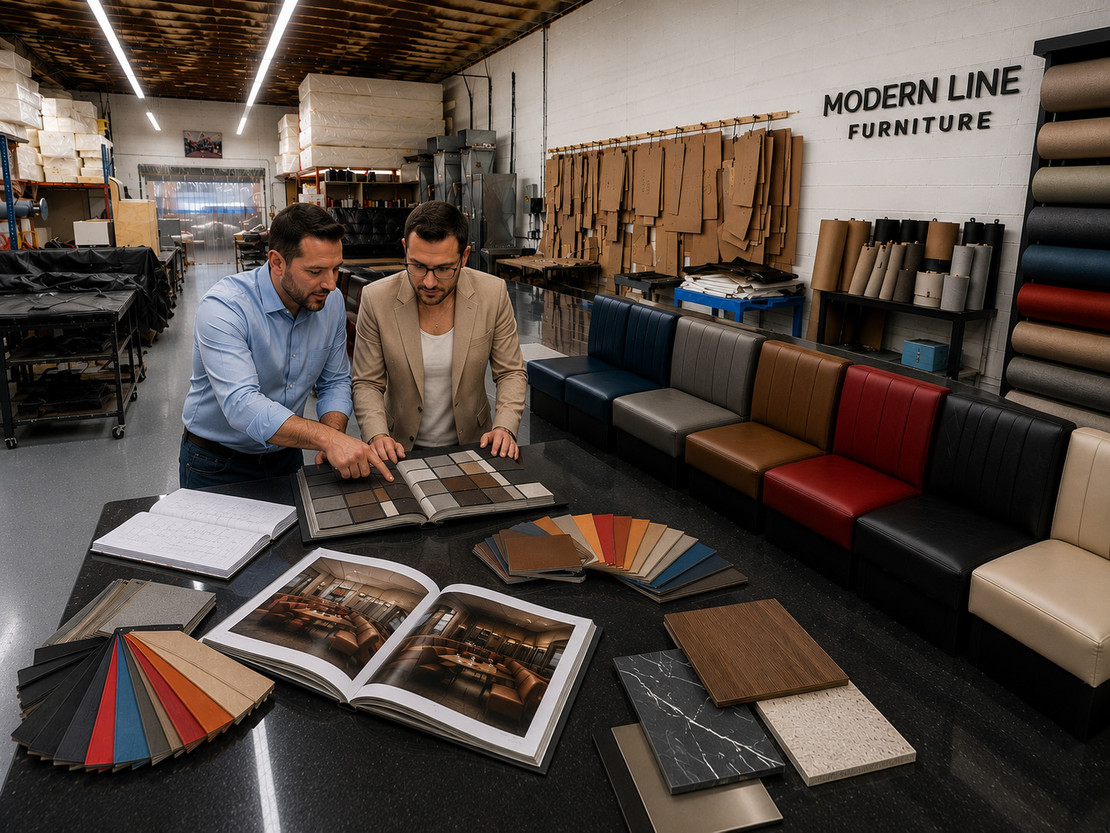
Why Interior Designers and Commercial Furniture Manufacturers Should Collaborate Earlier
Every successful commercial project begins with a vision. Whether it is a new restaurant, bowling center, golf simulator, hotel, airport lounge, or entertainment venue, the goal is always the same—to create a space that is attractive, functional, and profitable. While owners often focus on construction schedules and budgets, one of the most valuable partnerships during the planning process is between the interior designer and the commercial furniture manufacturer.
When interior designers are invited to a new commercial project, they come prepared with years of experience, creative ideas, and a portfolio of trusted suppliers. Their responsibility extends far beyond selecting colors and fabrics. They work alongside architects, general contractors, lighting companies, flooring specialists, millwork shops, HVAC contractors, electricians, and many other professionals involved in constructing the facility from the ground up. Every supplier has an important role, yet many manufacturers are not aware of the project until much later in the construction process.
One of the biggest responsibilities for the interior designer is creating a floor plan that maximizes the available square footage while maintaining comfort, traffic flow, and compliance with local building codes. Once the owner receives approval from the local building department and fire department regarding the facility's maximum occupancy, the designer knows exactly how many guests the space is permitted to accommodate. The next challenge is designing a layout that achieves the highest seating capacity without making the facility feel crowded or sacrificing the guest experience.
This is where Restaurant Booths, Single Booths, Double Booths, Half-Circle Booths, Lounge Seating, Restaurant Chairs, and Restaurant Tables become essential to the overall design. Together, these elements determine seating capacity, guest comfort, traffic flow, and the overall appearance of the commercial facility. Selecting the right products early allows interior designers to maximize every square foot while creating a space that is both functional and visually appealing.
Unfortunately, many commercial furniture manufacturers are introduced to the project only after the floor plan has already been completed or construction is well underway. By that point, designers may discover that standard furniture dimensions do not fit the layout as expected, resulting in costly revisions, fewer seats, or unnecessary project delays.
This is exactly why interior designers and commercial furniture manufacturers should collaborate earlier.
When designers contact the manufacturer during the planning stage, they gain direct access to the factory's production manager and commercial furniture specialists. Instead of making assumptions, they receive accurate answers before the plans are finalized. Questions such as, Can custom sizes be manufactured? Can we use our own upholstery material? What is the production lead time? Can finish and upholstery samples be provided for approval? Are CAL 117 compliant materials available? What vinyl offers the highest double-rub rating for commercial durability? can all be answered before construction moves forward.
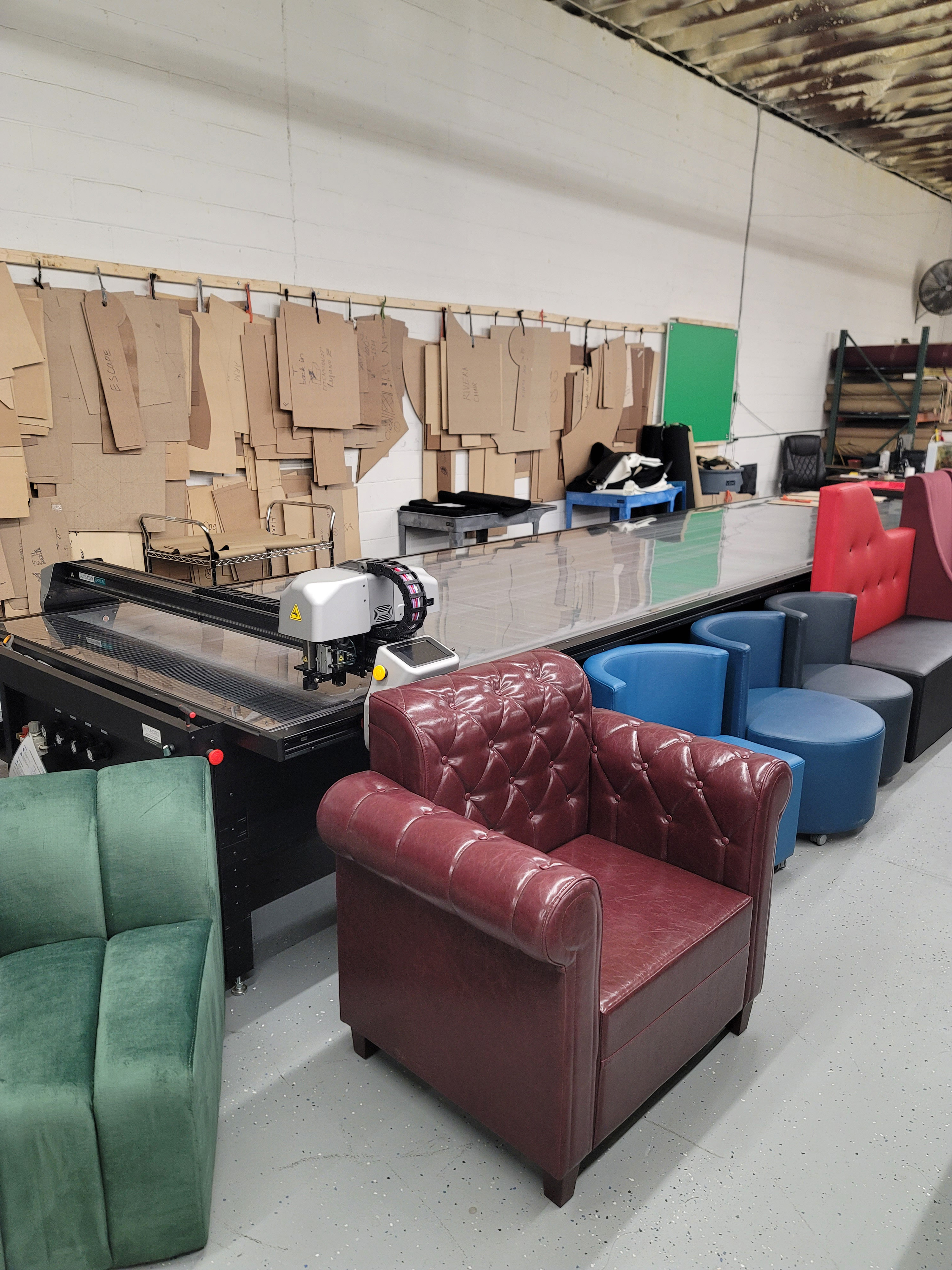
Having these answers early gives designers the confidence to complete their floor plans using actual furniture that can be manufactured specifically for the project. Rather than trying to make standard furniture fit the available space, they can design around custom solutions that improve seating capacity, complement the architectural vision, and meet the owner's expectations. It also allows the manufacturer to recommend construction methods, materials, and dimensions that improve durability while keeping the project on schedule.
For commercial property owners, early collaboration provides peace of mind. Once the furniture layouts, custom dimensions, material selections, and production schedule have been confirmed, owners can focus on the remaining stages of construction knowing that one of the largest investments in the project is already in motion. This minimizes uncertainty, reduces costly changes, and helps keep the project on schedule from start to finish.
The most successful commercial facilities are never the result of one company working alone. They are created through collaboration between owners, architects, contractors, interior designers, and experienced commercial furniture manufacturers who understand how every detail contributes to the finished environment. By involving the furniture manufacturer earlier in the design process, projects move more efficiently, designers gain greater flexibility, and owners receive a commercial space that is built to perform for years to come.
For more information about working directly with a commercial furniture manufacturer, visit Modern Line Furniture Factory: https://www.