
What Happens When You Purchase the Wrong Restaurant Furniture? (And What to Do Next)
Furnishing a restaurant is one of the most exciting stages of opening a new location—but it can quickly turn into one of the most stressful if something goes wrong.
Many restaurant owners carefully select their furniture, place large orders, and wait for delivery expecting everything to come together perfectly. But in today’s market, that’s not always how it plays out.
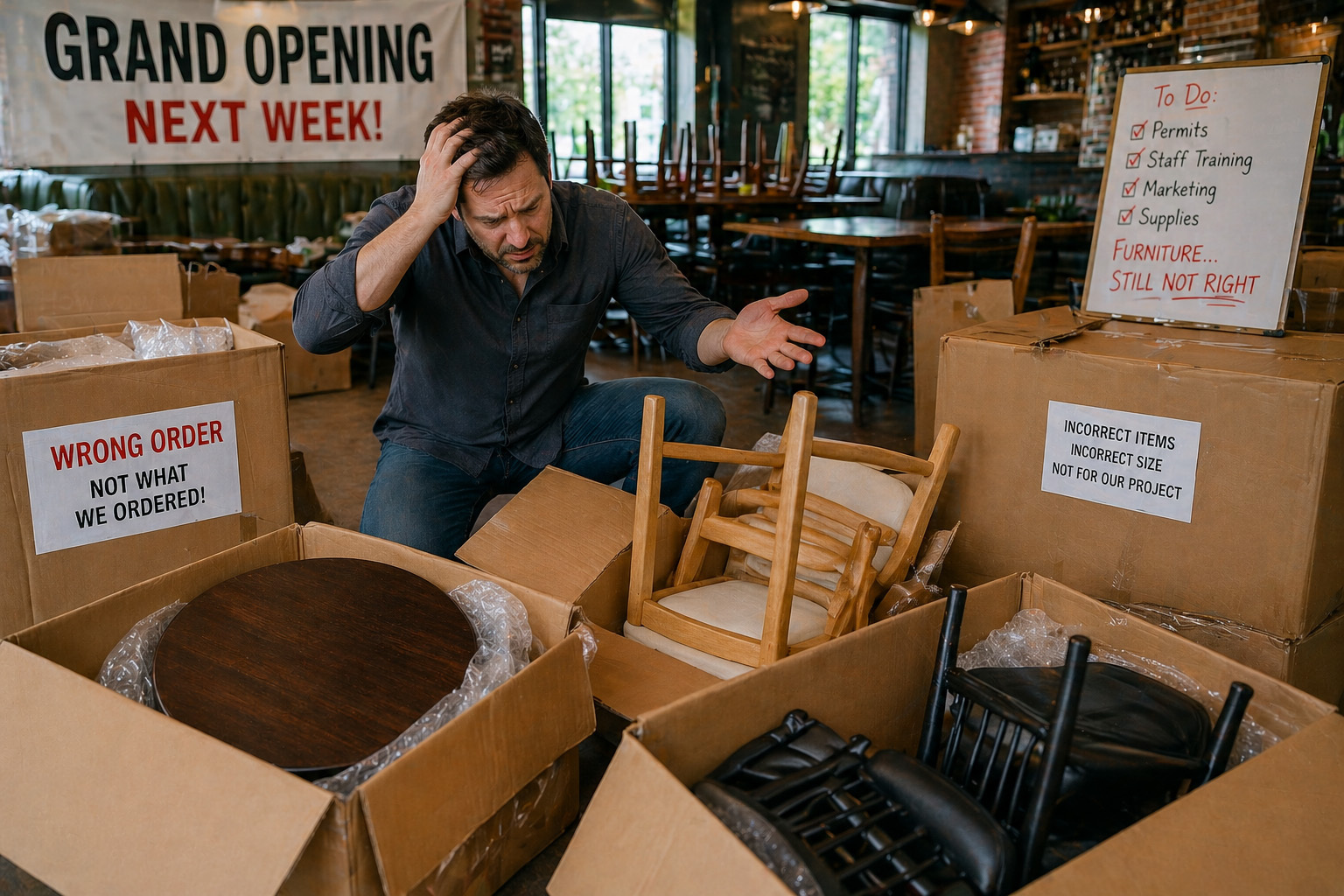
There are real situations where the furniture arrives, and only then do the problems become clear. Booths may not fit the layout as planned. Tables may be the wrong size. Chairs may not be suitable for high-traffic use. Sometimes the overall look does not match the original vision.
At that point, the focus shifts from design to problem-solving.
The challenge becomes even more complex when the supplier has limited flexibility. This is often the case with products that are imported or built through longer supply chains. Once the furniture is delivered, returning or replacing it can involve high costs, long delays, or limited options.
For a restaurant preparing to open, time becomes the biggest concern.
Delays affect:
- Opening schedules
- Staff hiring and training
- Marketing campaigns
- Revenue expectations
Every day matters.This is why more operators today are thinking differently. Instead of reacting emotionally, they take a structured approach to recover the situation and move forward efficiently.
Some attempt to return the order—even at a cost. Others explore selling unused items through secondary markets. In many cases, owners look at how to reuse or reconfigure what they already have to avoid losing time.
The goal is not perfection at that stage.The goal is to regain control of the project.
In real-world commercial projects, the ability to adapt and make smart decisions quickly often determines whether the opening stays on track—or gets delayed.
Q1: Can I return restaurant furniture after it has been delivered?
Answer:
In many cases, returning commercial furniture after delivery is possible—but it often comes with conditions.
Buyers may face:
- Restocking fees
- Return shipping costs
- Limited return windows
Before proceeding with a full return, it is often worth discussing options with the supplier.
Some companies may offer:
- Partial returns
- Store credit
- Replacement options
This approach can reduce financial loss and provide more flexibility.
Q2: Should I return everything or only part of the order?
Answer:
A full return is not always the most efficient solution.
In many situations, it makes more sense to:
- Keep items that can still be used
- Return only the pieces that create problems
- Adjust the layout to fit existing furniture where possible
A partial solution can save time, reduce costs, and keep the project moving forward.
Q3: Can I resell unused restaurant furniture?
Answer:
Yes, reselling is a common option—especially if the furniture is new and unused.
Popular resale channels include:
- Local business networks
- Restaurant owner groups
- Secondary marketplaces
Positioning the items as “new commercial furniture available immediately” can help attract buyers quickly.
While resale may not recover the full cost, it can help minimize losses and free up capital for replacements.
Q4: Should I use the furniture temporarily or replace it immediately?
Answer:
In many cases, using the furniture temporarily is a practical solution.
Instead of delaying the opening, operators may:
- Use existing furniture for a short period
- Begin generating revenue
- Replace or upgrade items in phases
This approach turns a setback into a manageable situation and allows the business to move forward.
Q5: What is the best way to recover from a wrong furniture purchase?
Answer:
The most effective approach is a combination of strategies:
- Negotiate with the supplier for return or credit options
- Reuse or reconfigure what can still work
- Replace only the most critical items first
- Resell excess inventory where possible
Q6: What should I do differently next time when ordering restaurant furniture?
Answer:
One of the most important lessons from situations like this is the importance of proper supplier selection and planning before placing an order.
In today’s market, not all furniture suppliers operate the same way. Some rely heavily on overseas production and extended supply chains, which can limit flexibility, affect timelines, and complicate issue resolution after product delivery. This is why proper research is critical.
Restaurant owners should focus on working with established manufacturers and suppliers who have control over their production process.
For example, companies such as Shelby Williams, Grand Rapids Chair Company, and Modern Line Furniture are known for serving the commercial and hospitality industry with products designed for performance, durability, and consistency.
These types of manufacturers are able to:
- Maintain stronger quality control
- Provide more accurate and realistic lead times
- Customize products to fit exact specifications
- Ensure consistency across multi-location projects
The key is not just choosing furniture—but choosing a partner who can deliver quality, accuracy, and reliability.
Before placing your next order, make sure to:
- Verify exact measurements and layout requirements
- Confirm production timelines and delivery expectations
- Understand where and how the furniture is manufactured
- Work with companies experienced in commercial-grade production
 Taking these steps helps ensure your furniture will arrive on time, built correctly, and ready to perform in high-traffic environments.