
What Does a Commercial Furniture Dealer Actually Do—And Why Manufacturing Partnerships Matter
When people think about purchasing commercial furniture, they often assume the company selling the furniture is also manufacturing it. In reality, the commercial furniture industry works very differently.
Many of today's most successful commercial furniture dealers focus on understanding their clients, developing furniture specifications, coordinating projects, and managing installations. Their expertise lies in consulting with customers, creating functional environments, and recommending furniture solutions that support healthcare, education, hospitality, corporate offices, restaurants, government facilities, legal offices, senior living communities, airports, and many other commercial markets.
Manufacturing, however, is an entirely different specialty.
So, what does a commercial furniture dealer actually do, and when does a manufacturing partner become part of the project?
Understanding the Dealer's Role
Commercial furniture dealers are much more than product suppliers.They spend years learning how different industries function and how furniture impacts productivity, workflow, comfort, collaboration, durability, and the overall user experience. Many provide space planning, furniture layouts, finish selections, budgeting, procurement, installation coordination, and ongoing project management.
Their responsibility is understanding the client's vision and recommending the right furniture solutions to achieve it.
In many cases, the dealer works alongside architects, interior designers, purchasing departments, developers, and facility managers long before any furniture is manufactured.
Why Don't Most Commercial Furniture Dealers Own Manufacturing Facilities?
This is one of the most common misconceptions within the industry.
Operating a commercial furniture manufacturing facility requires significant investments in engineering, CNC machining, woodworking, metal fabrication, upholstery, finishing, warehousing, quality control, logistics, purchasing, and production management.
For many commercial furniture dealers, it makes far more business sense to concentrate on client relationships and project management while partnering with experienced manufacturers that specialize in production.
Each company focuses on what it does best.
When Does the Manufacturing Partner Become Involved?
The manufacturing partner typically becomes involved after the dealer, architect, or interior designer has completed the initial design phase and received preliminary client approval.
By this point, the dealer usually has floor plans, furniture layouts, elevations, finish selections, seating concepts, budgets, and overall project objectives prepared.
This is where the collaboration begins.
Rather than simply placing an order, the dealer meets with the manufacturing team to review every aspect of the project.
Furniture dimensions,Seating capacities,Upholstery selections and so on. Every specification is carefully reviewed before production begins.
Turning Ideas Into Production
Once the project has been reviewed, the manufacturing team develops a complete production package.
This package typically includes engineering drawings, production dimensions, approved materials, finish schedules, construction details, hardware specifications, upholstery selections, and manufacturing instructions.
Think of it as the roadmap used by every department throughout production.
Only after these production documents have been reviewed and approved does manufacturing begin.
This collaborative process helps eliminate costly mistakes, protects the designer's original vision, and gives every project a much greater opportunity for success.
What Types of Commercial Furniture Can Be Manufactured?
Once engineering has been completed, virtually any type of custom commercial furniture can be produced.
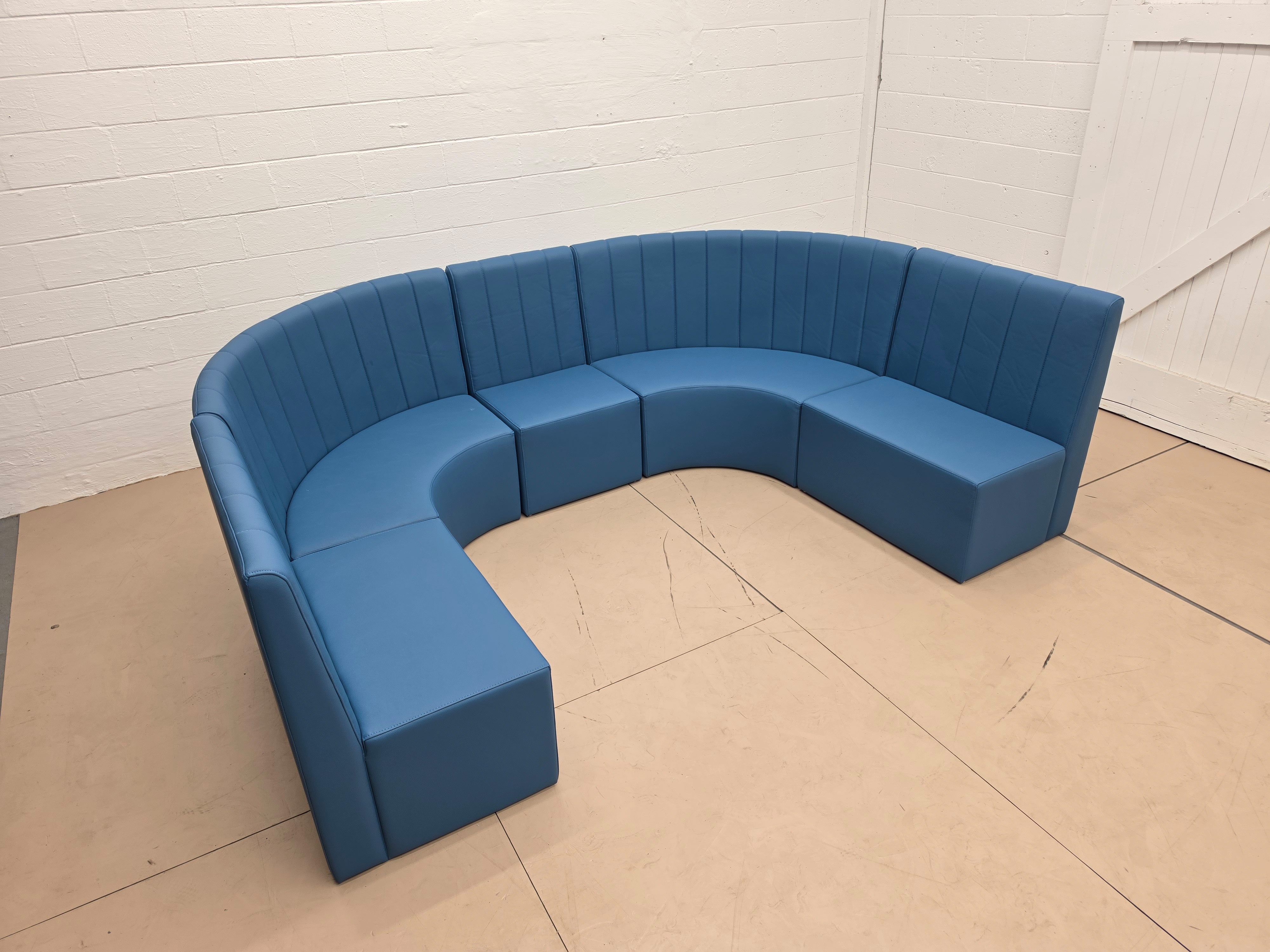
This may include Restaurant Booths, Tall Back U-Shape Booths, Half-Circle Booths, Restaurant Tables, Communal Tables, custom conference tables, reception furniture, hospitality seating, healthcare furnishings, educational furniture, airport seating, government furniture, collaborative workspaces, VIP Seating Areas, Modular Lounge Seating, Club Chairs & Lounge Chairs, and complete custom-built seating environments designed specifically for each project.
Every product is manufactured according to the dealer's approved specifications—not redesigned by the manufacturer.
Why Manufacturing Partnerships Continue to Grow
As commercial projects become increasingly customized, partnerships between dealers and manufacturers have become more valuable than ever.
Dealers bring industry expertise, client relationships, and product knowledge.
Architects create the vision.
Interior designers shape the user experience.
Manufacturers transform those approved concepts into production-ready commercial furniture.
Each partner contributes specialized knowledge while focusing on their area of expertise.
The result is a collaborative process that delivers better quality, greater flexibility, improved communication, and furniture built specifically for each project's requirements.
A Partnership That Benefits Everyone.
One of the greatest advantages of white-label and private label manufacturing is that every participant remains focused on what they do best.