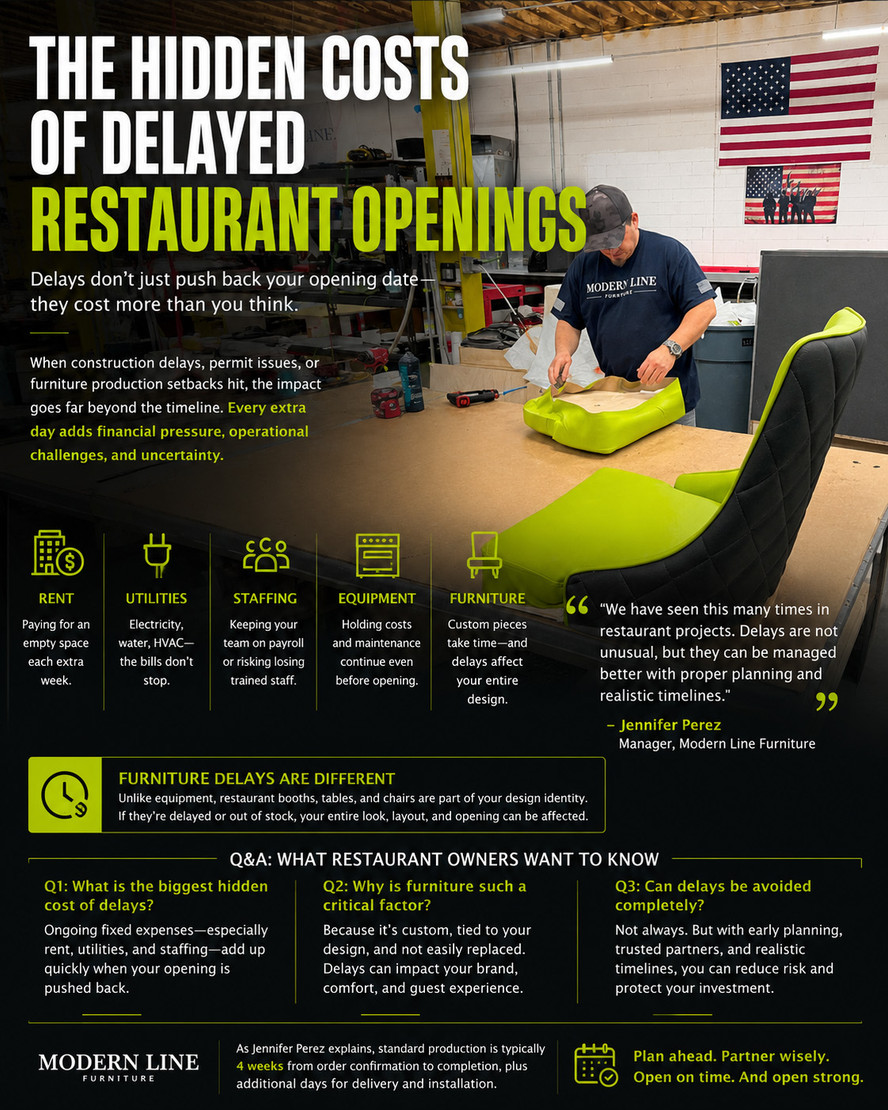
The Hidden Costs of Delayed Restaurant Openings
In the restaurant business, timing is everything.
Every opening date is more than just a target on a calendar—it represents months, sometimes years, of planning, design decisions, financial investment, and personal expectation. Owners visualize the moment the doors open, the first guests walk in, and the restaurant finally comes alive.
But behind that vision, there is a reality every operator knows well: delays happen.
And when they do, the cost is rarely just about time.
It usually starts in a controlled way.
When restaurants begin their projects, most owners already accept that small surprises will appear along the way. A permit takes longer than expected. A delivery shifts by a few days. A contractor needs to adjust scheduling.
These minor delays are frustrating, but manageable. They are part of the rhythm of construction and opening a new space.
However, there is a very different category of delay—the kind that disrupts the entire chain of planning.
Construction slowdowns caused by material shortages, inspection bottlenecks, or approval delays can stop progress completely. At that point, the opening date doesn’t just move slightly—it gets pushed into uncertainty.
And once that happens, costs begin to accumulate every single day.
One of the first and most painful impacts is rent.
Restaurant spaces are typically leased well before they are operational. That means every extra week of delay is another week of paying for a space that is not generating any revenue.
For many operators, rent is one of the largest fixed expenses. So even a short delay quickly turns into a significant financial burden.
But rent is only the beginning.
Utilities must still be maintained—electricity for inspections, HVAC systems running to preserve installations, water connections being tested. Equipment that has already been delivered or installed may also require ongoing maintenance or storage management.
The result is a steady flow of expenses into a business that has not yet opened its doors.
Then comes staffing.
Many restaurant operators begin hiring early. They train teams, build culture, and prepare service standards before opening day. The goal is simple: be fully ready when the first guest arrives.
But delays complicate that plan.
Now owners are faced with a difficult decision: continue paying staff to retain them, or risk losing trained employees and restarting the hiring process.
Either choice carries cost. Either choice creates pressure. And either choice affects momentum.
Equipment adds another layer.
Kitchen equipment like refrigerators, ovens, and prep stations are essential, and in recent years, supply chain disruptions have made availability unpredictable.
Fortunately, this is one area where operators often have some flexibility. There are usually multiple dealers, alternative brands, or comparable models that can replace delayed items without completely changing the kitchen concept.
But not everything in a restaurant works this way.
Restaurant Furniture is different.
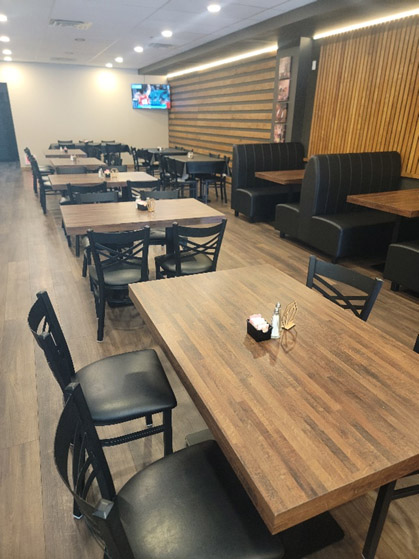
Restaurant booths, tables, and chairs are not just functional items—they are part of the design identity. They define how guests move through the space, how comfortable they feel, and how the brand is experienced visually.
Imagine a restaurant where the entire interior design—lighting, flooring, color palette, and layout—has been built around specific seating configurations.
Now imagine being told that those custom booths or tables are delayed in production.
At that moment, the problem is no longer just logistical. It becomes a design issue, a branding issue, and in many cases, a timing crisis.
Owners are forced to search quickly for alternatives, often under pressure and without enough time for detailed evaluation. Decisions that were meant to be intentional suddenly become reactive.And in that rush, quality and consistency can be compromised.
As Jennifer Perez, a project manager at Modern Line Furniture, explains:
“We have seen this many times in restaurant projects. Delays are not unusual, but they can be managed better with proper planning and realistic timelines.”
She continues:
“If the goal is a cohesive and uniform interior, it’s important to plan ahead and work with manufacturers who understand production timelines and maintain consistency. That helps reduce last-minute surprises.”
In her experience, standard production timelines for restaurant furniture are typically:
- Around 4 weeks from order confirmation to completion
- Plus additional time for delivery and installation logistics
While this may seem straightforward, it becomes critical when aligned with construction schedules and opening deadlines.
What many owners learn too late is that delays do not happen in isolation.
A construction delay pushes back furniture installation. A furniture delay pushes back final inspections. A final inspection delay pushes back staff training and soft openings.
One issue becomes three. Three become ten.
And suddenly, the opening is no longer a date—it is a moving target.
Source: Modern Line Furniture Manufacturer Factory
Q1: What is the biggest hidden cost of delayed restaurant openings?
The biggest hidden cost is ongoing fixed expenses—especially rent, utilities, and staffing costs—paid for a space that is not generating revenue. These costs accumulate quickly with every additional week of delay.
Q2: Why is restaurant furniture such a critical factor in delays?
Unlike equipment, restaurant furniture is often custom-designed to match the interior concept. Delays in booths, tables, or chairs don’t just affect logistics—they directly impact design consistency, branding, and the ability to open on time.
Q3: Can restaurant operators fully avoid delay-related issues?
They cannot eliminate delays completely, but they can reduce risk by planning ahead, working with reliable manufacturers, and building realistic timelines that account for production, shipping, and installation buffers.