Restaurant Interior Design Ideas: Traditional, Modern, and Industrial — What’s the Difference?
Restaurant interior design should do more than make a dining room look attractive. The design should complement the restaurant’s concept, kitchen, cuisine, level of service, and the type of experience customers expect. A formal steakhouse should feel different from a contemporary sushi restaurant, just as an industrial-style brewery should have a different personality from a traditional American restaurant.
Three popular approaches—Traditional, Modern, and Industrial restaurant design—use furniture, colors, materials, and architectural details in very different ways.
1. Traditional Restaurant Interior Design
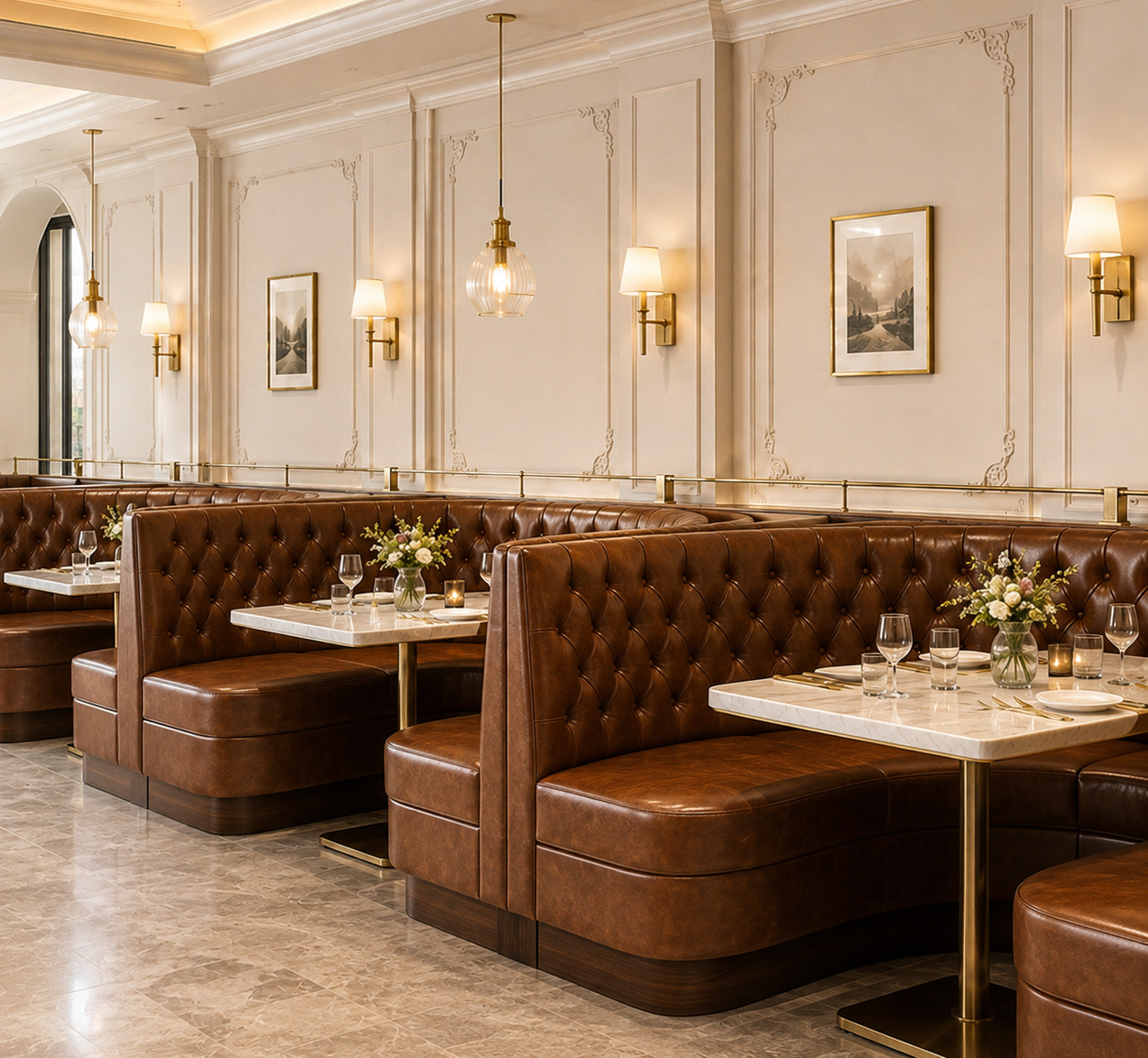
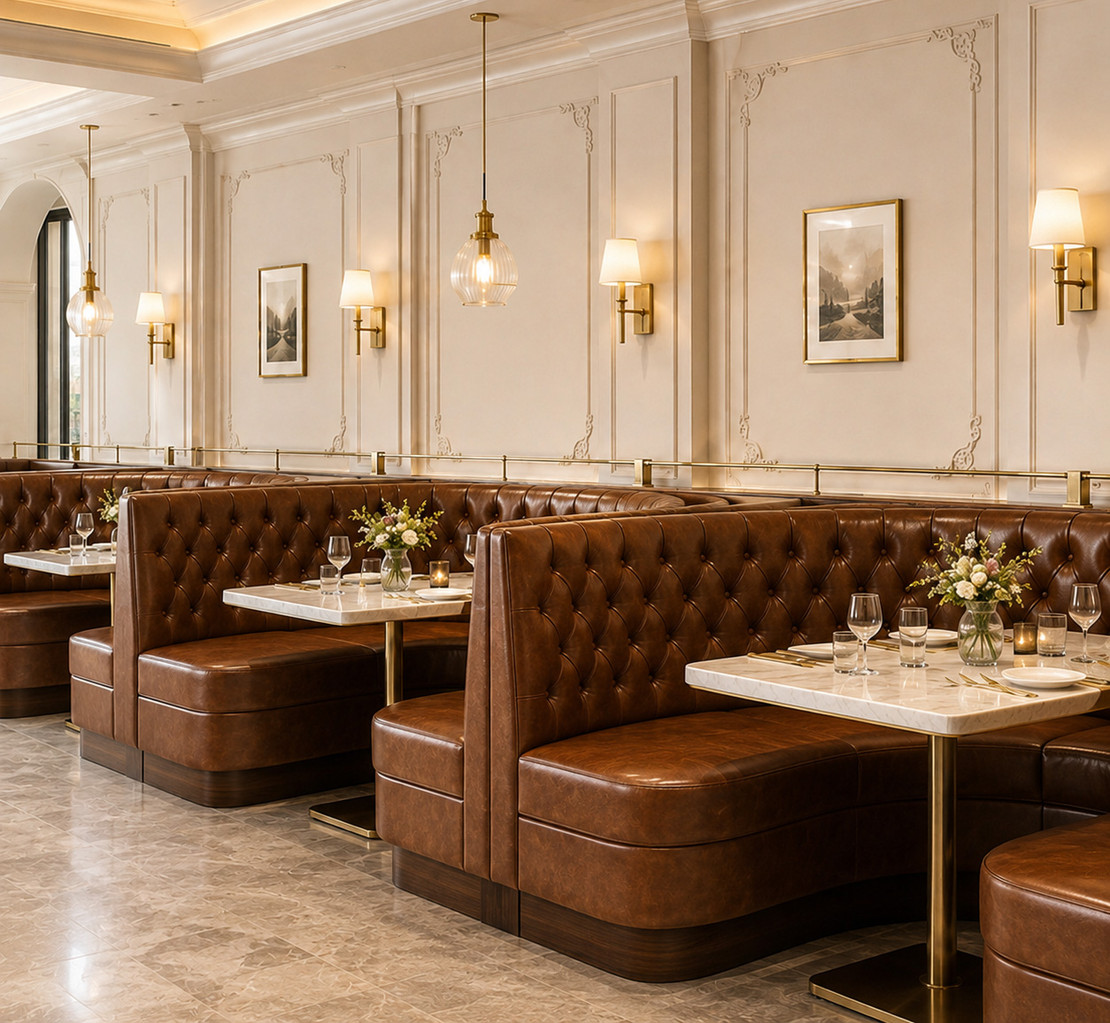
Traditional restaurant design remains one of the most recognizable styles across the United States. It is particularly common in formal steakhouses, American restaurants, Italian restaurants, seafood restaurants, and established fine-dining concepts where warmth and comfort are part of the dining experience.
Traditional interiors generally use more conservative colors. Black, brown, burgundy, tan, cream, and darker wood tones are more common than bright multi-color combinations.
One of the defining furniture elements is the use of upholstered Restaurant Booths. Single and double booths can be arranged throughout the dining room to create comfortable seating while maximizing available space.
Booth designs often include channel backs or flat backs, with the booth structure sitting on a finished kick panel or with frames extending all the way to the floor. These substantial designs help create the solid, established appearance associated with traditional restaurants.
The style works especially well with kitchens centered around steaks, classic American cuisine, Italian dishes, seafood, and other menus where guests may expect a longer, more formal dining experience.
2. Modern Restaurant Interior Design
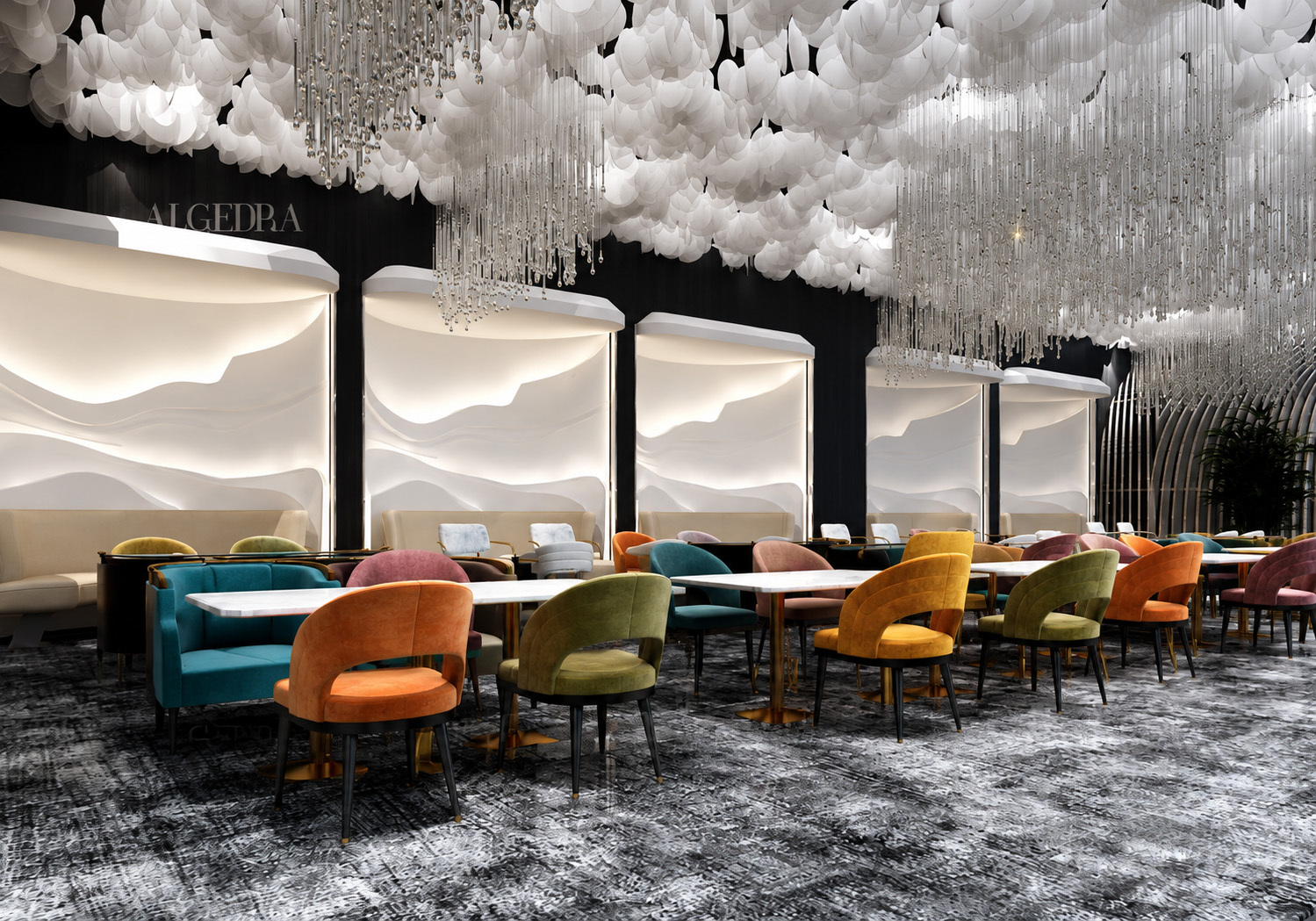
Modern restaurant interiors move away from the heavier appearance of traditional furniture and introduce cleaner lines, slimmer profiles, contemporary shapes, and more adventurous colors.
Instead of hiding the furniture frame, designers may make it part of the overall appearance. Sleek frames or 1-inch metal tubing finished in gunmetal can be combined with upholstered seating in blue, green, red, yellow, purple, or other distinctive colors.
The selection of Restaurant Chairs becomes particularly important because contemporary chairs can function as both seating and a design element. Upholstery, stitching, metal finishes, and chair profiles can help establish a recognizable identity throughout the restaurant.
Modern design can complement contemporary American cuisine, sushi and Asian concepts, Mediterranean restaurants, cafés, hotel restaurants, and chef-driven concepts where presentation and creativity are important parts of the experience.
The goal is not necessarily to make everything futuristic. It is about creating a clean, coordinated environment where furniture, lighting, colors, and the food concept speak the same design language.
3. Industrial Restaurant Interior Design
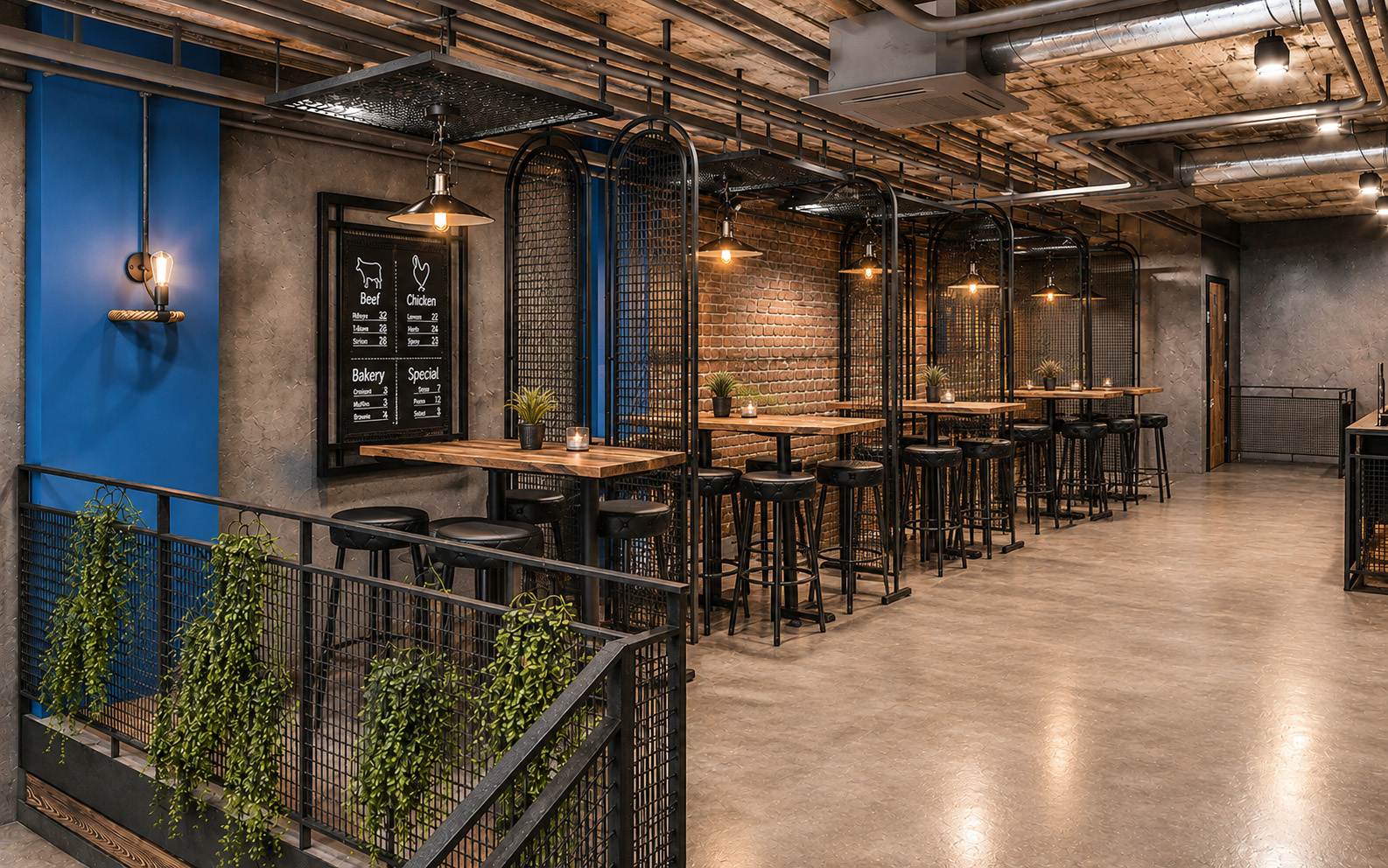
Industrial restaurant design is generally more minimalistic and architectural. Instead of covering structural elements, the design often celebrates them.
Exposed ceilings, ductwork, concrete floors, brick, steel, and darker finishes can become part of the restaurant's character. Furniture follows the same philosophy.
Restaurant booths may feature exposed gunmetal frames, allowing customers to see structural metal components that would normally be concealed. Tables can combine distinctive tops with gunmetal or uniquely finished Table Bases, turning normally functional components into visible design features.
Bar stools can then complement the exposed booth frames and table bases, helping carry the same metal finish throughout the restaurant.
This style works naturally with breweries, gastropubs, pizzerias, burger concepts, barbecue restaurants, urban cafés, and restaurants located in converted warehouses or industrial buildings. Open kitchens can work especially well because visible cooking equipment and stainless steel can become another part of the industrial aesthetic.
Matching Furniture to the Restaurant Concept
Traditional, Modern, and Industrial restaurants can serve completely different cuisines, but successful interiors share one principle: the furniture should make sense with the food, architecture, service, and overall restaurant experience.
Traditional design creates warmth and familiarity. Modern design introduces cleaner forms, contemporary furniture, and greater freedom with color. Industrial design exposes materials and structural elements to create a more raw, architectural environment.
The strongest restaurant interiors are not created by choosing furniture independently. They are created when the kitchen concept, cuisine, furniture, colors, materials, lighting, and architecture work together as one complete experience.
Source:https://www.