Industry West went out of business -Industry Insight – Potential Opportunity
Over the past year, a noticeable shift has taken place in the commercial furniture industry—and buyers are feeling the impact.
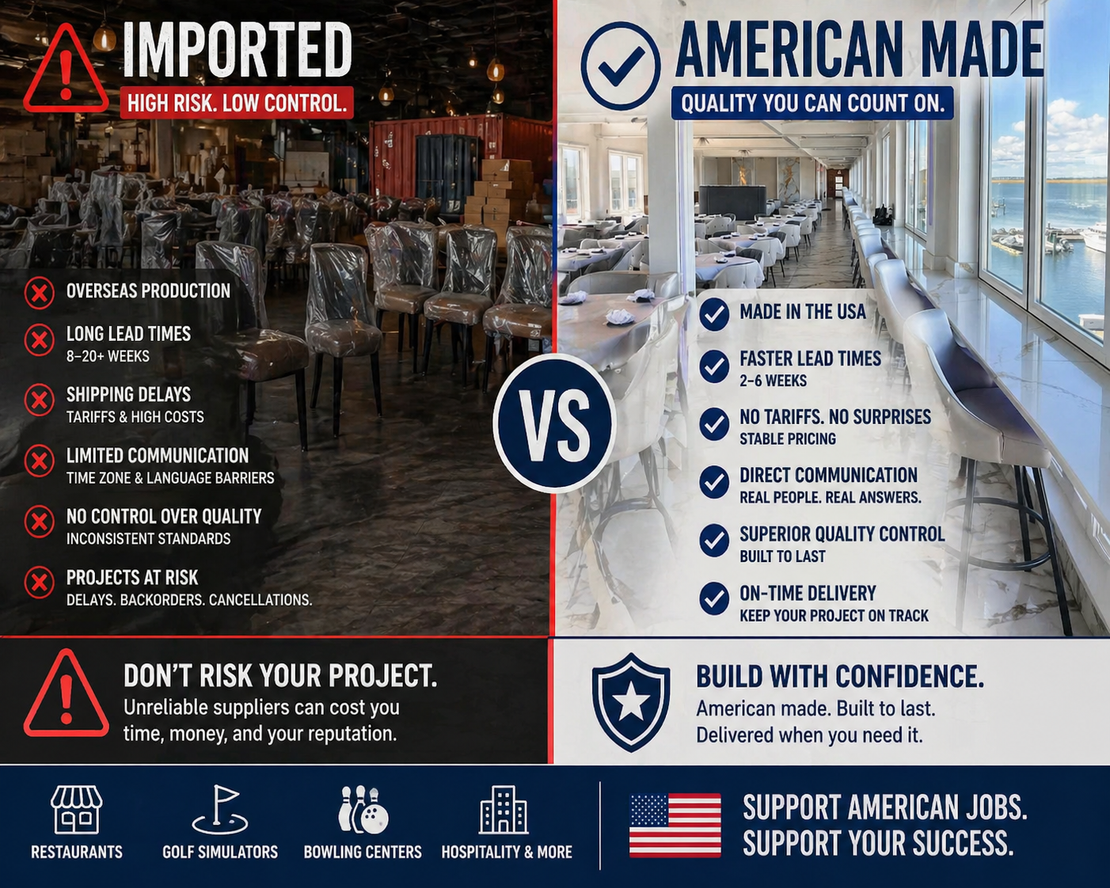
Restaurant franchises, golf simulator venues, bowling centers, and hospitality operators are running into a problem that didn’t exist at this level before. Orders are delayed, timelines are unclear, and in some cases, suppliers are unable to fulfill commitments at all.
Many of these challenges are tied to companies that rely heavily on overseas production. Brands like Industry West built their business on imported furniture—manufactured abroad, shipped in containers, and distributed domestically.
For years, that model worked. Today, it is under pressure.
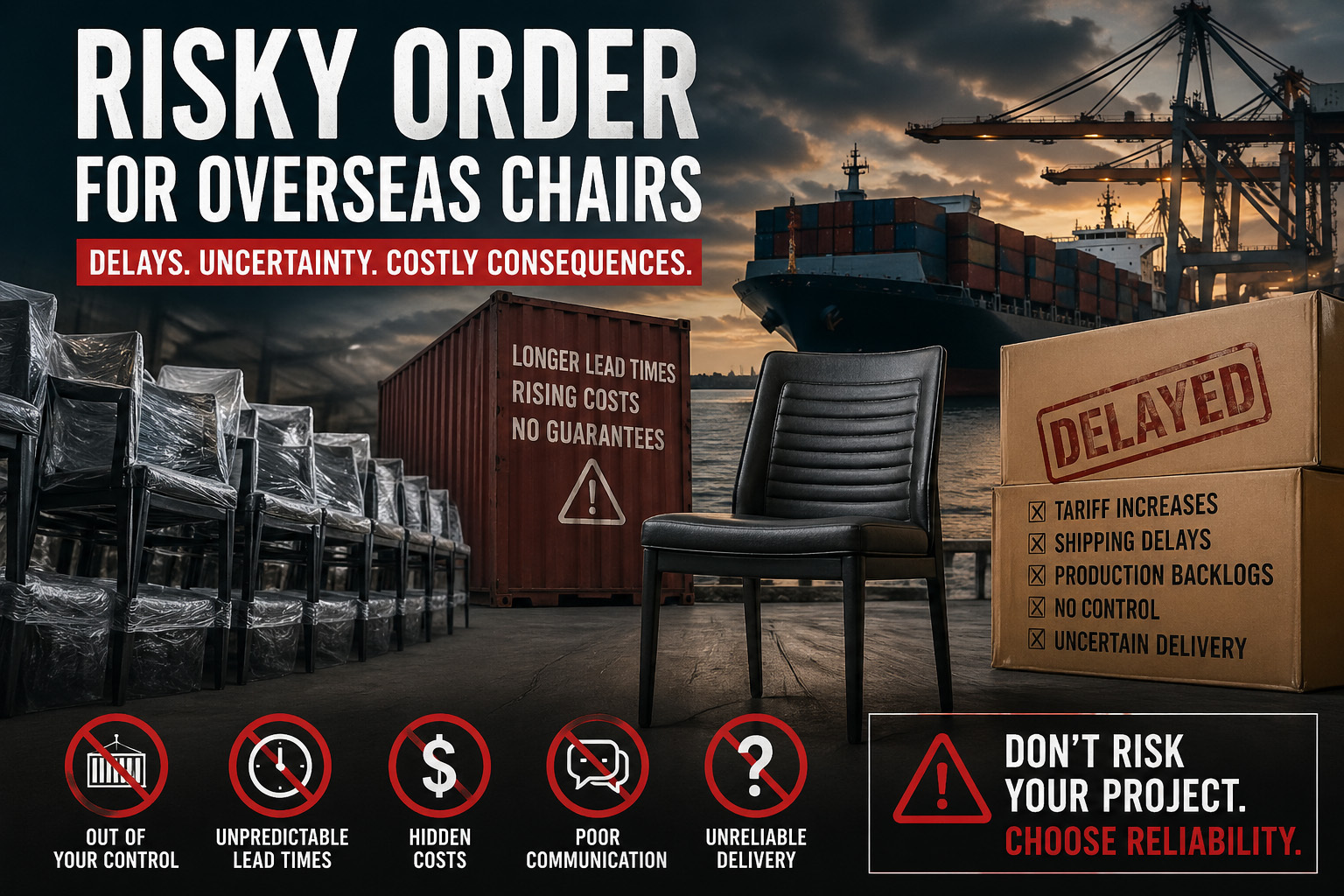
Tariffs, rising shipping costs, and longer production timelines have created a situation where some import-driven companies struggle to keep up with demand. In certain cases, buyers are left waiting without clear answers, uncertain delivery dates, or reliable communication.
This is where projects begin to fall into limbo.
And for a restaurant preparing to open or a commercial space trying to launch on schedule, that risk is too high.
As a result, many buyers are now actively looking for alternatives—companies that can step in, respond quickly, and deliver within a defined timeframe.
This is why manufacturers such as Shelby Williams, Bernhardt Hospitality, Grand Rapids Chair Company, and Modern Line Furniture are receiving increased demand. These are becoming the “save-the-day” companies.
They are the ones buyers call when:
- Orders fall through
- Timelines are at risk
- Projects need to move forward without delay
Because they control production, they can respond.
They can provide realistic timelines, offer alternatives, and most importantly—deliver when it matters.
The industry is not just changing—it is forcing buyers to rethink who they trust.
Q1: Why are some commercial furniture companies becoming unreliable?
Answer:
The issue is not always the company itself—it’s the model behind it.
Import-based companies depend on:
- Overseas factories
- International shipping
- Inventory arriving on schedule
When disruptions happen, they lose control.
This is why buyers today are experiencing:
- Orders that cannot be fulfilled
- Long and uncertain delays
- Limited or no communication
In some cases, companies appear active but are struggling behind the scenes.
Q2: Who are buyers turning to when projects are at risk?
Answer:
Buyers are turning to companies that can step in and take control of the situation.
Manufacturers like Shelby Williams, Bernhardt Hospitality, Grand Rapids Chair Company, and Modern Line Furniture are increasingly becoming trusted partners.
These companies are often brought in mid-project to:
- Replace delayed orders
- Provide faster production
- Offer dependable timelines
This is why they are seen as problem-solvers, not just suppliers.
Q3: How can buyers avoid getting stuck with the wrong company?
Answer:
Buyers need to evaluate more than just product and pricing.
Ask these key questions:
- Does the company control its production?
- Can they commit to realistic delivery timelines?
- How responsive are they when issues arise?
- Do they offer solutions if something goes wrong?
Q4: What should I do if I’m unsure about a commercial furniture supplier?
Answer:
If you are unsure about a supplier’s ability to deliver, the best approach is to do your due diligence before placing an order.
In today’s market, even established brands—such as Industry West—may experience fluctuations related to overseas production, shipping timelines, and broader supply chain conditions. These factors can occasionally affect availability and delivery expectations, especially for larger commercial projects.
For this reason, it’s important to evaluate a company based on its current operations, not just past reputation.
Before moving forward, buyers should:
- Confirm up-to-date lead times and availability
- Understand where and how products are manufactured or sourced
- Review recent project completions or references
- Assess the company’s responsiveness and communication
Exploring multiple suppliers—including those with more direct control over production—can help reduce risk and ensure a smoother project timeline.
Choosing the wrong supplier can delay your entire project.
In real-world scenarios, the companies that control production and deliver on time are the ones that keep projects moving—and step in when others cannot.
Visit our Buying Guide Page for more Info: https://www.