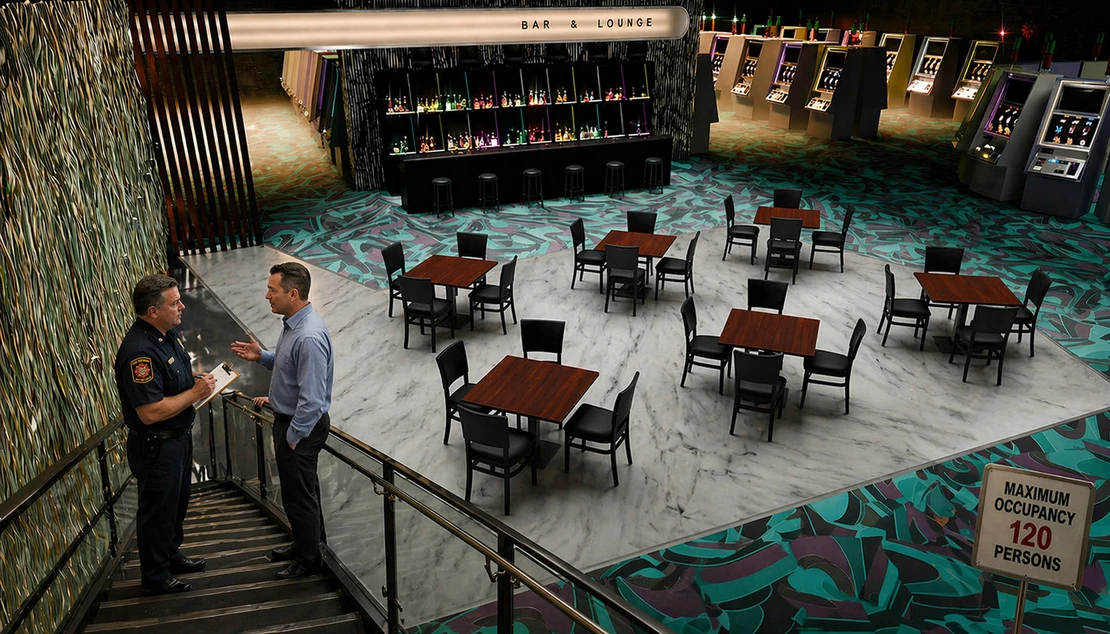
How to Maximize Restaurant Occupancy While Following Safety Rules and Regulations
When restaurant owners and operators plan their space, the main goal is always the same—fit as many guests as possible while keeping the operation smooth and profitable.
But today, it’s not that simple anymore.
There are rules, regulations, spacing requirements, and overall safety expectations that must be followed. Especially in states like New Jersey, where indoor dining guidelines clearly define how tables should be spaced and how guests should be seated.
So the real question becomes: How do you maximize occupancy without breaking the rules?
Let’s go through this step by step, the same way we explain it to our clients.
Q1: How Can I Increase Seating Capacity Without Violating Regulations?
One of the most common mistakes owners make is thinking that adding more tables will automatically increase capacity.
In reality, that approach usually backfires.
With safety guidelines requiring proper spacing between tables, simply adding more furniture often leads to:
- overcrowded layouts
- poor traffic flow
- non-compliance issues
Instead, the focus should be on how the space is used, not how much furniture is added.
This is where Restaurant Booths become a key solution.
Booths naturally define seating areas. They act as built-in separators between guests, which helps maintain proper spacing without the need for additional barriers.
Another important strategy is selecting larger-capacity booth seating.
Using 60" and 72" long single and double Restaurant Booths allows you to seat more guests within the same footprint. Instead of breaking the layout into smaller units, larger booths create more efficient seating zones and reduce wasted space between tables.
In addition, long wall bench seating is one of the most effective ways to maximize occupancy. It eliminates unused space behind chairs and allows multiple tables to be placed along a continuous seating line—resulting in more guests per linear foot.
In many cases, combining booths and wall benches allows operators to:
- create cleaner, more organized layouts
- reduce unused space
- increase the number of seats while staying compliant
The goal is not just more seats—it’s smarter seating.
Q2: What Layout Strategies Actually Work in Real Restaurants?
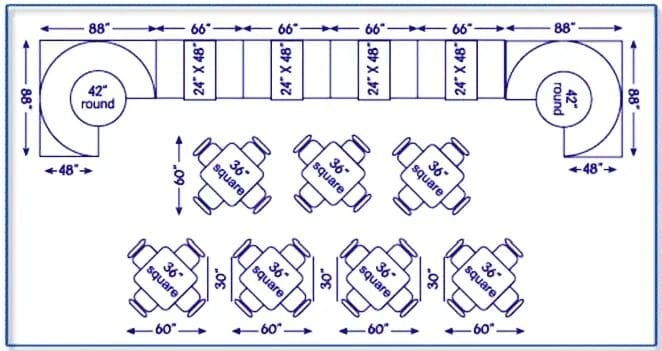
Now let’s talk about what works in real life—not just on paper.
One of the biggest improvements operators can make is switching from traditional table-and-chair setups to wall seating and modular layouts.
Why?
Because chairs require space behind them. Every time you place a chair, you lose valuable square footage.
With wall seating or booths:
- that extra space disappears
- tables can be positioned more efficiently
- spacing rules are easier to follow
Another powerful solution is using U-shape or L-shape seating configurations.
Instead of placing furniture in straight lines, these layouts allow you to:
- use corner space more effectively
- fit more guests into the same area
- maintain comfortable and compliant spacing
For example, a U-shape sectional can seat more people in a compact footprint compared to a long straight sofa or multiple chairs.
Table size also plays a major role in occupancy.
Choosing the right Restaurant Table sizes can significantly impact how many guests you can serve:
- 36" x 36" tables comfortably seat 4 guests
- 30" x 60" tables can accommodate up to 6 guests
Using these sizes strategically allows you to increase seating capacity without overcrowding the space. Instead of relying on oversized tables, properly sized units help maintain balance between comfort and efficiency.
This is exactly how you increase revenue per square foot while staying within regulations.
Q3: How Do Furniture Choices Affect Both Safety and Profitability?
This is where everything comes together.
Furniture is not just about design—it directly impacts how your business performs.
Traditional layouts with loose Restaurant Chairs often create:
- inconsistent spacing
- cluttered walkways
- inefficient use of space
On the other hand, a well-planned combination of Restaurant Tables, Restaurant Booths, and structured seating systems creates a controlled and efficient environment.
Booths, in particular, offer:
- natural separation between groups
- better organization of the floor plan
- improved customer comfort
Another important opportunity many operators overlook is adding bar seating.
If space allows, incorporating bar tables with bar stools can generate additional revenue. These units:
- require less space than traditional seating
- can accommodate quick-turn customers
- are not part of permanent installations, making them easy to move and reposition
This flexibility allows you to adjust your layout based on demand, time of day, or special events.
At the same time, materials matter.
In today’s environment, furniture must be:
- easy to clean
- durable for high-traffic use
- resistant to constant wear
This is why many operators are moving toward laminate surfaces and commercial-grade materials that require minimal maintenance while still delivering a high-end look.
Service flow is another critical factor. Staff must move efficiently between tables without congestion. A well-planned layout improves service speed, enhances safety, and increases table turnover.
At the end of the day, maximizing occupancy is not about squeezing more tables into your restaurant.
It’s about:
- understanding the rules
- designing smarter layouts
- choosing the right furniture
- and thinking long-term
The most successful operators today are not the ones with the most furniture—they are the ones who use their space the best.
By focusing on:
- larger-capacity booth seating
- long wall bench layouts
- efficient table sizing
- flexible bar seating options
- and proper spacing
You can create a space that:
- meets safety regulations
- maximizes seating capacity
- improves customer experience
- and increases profitability
The goals are more seats, better flow, and a stronger business without cutting corners.
See images for additional information: https://www.