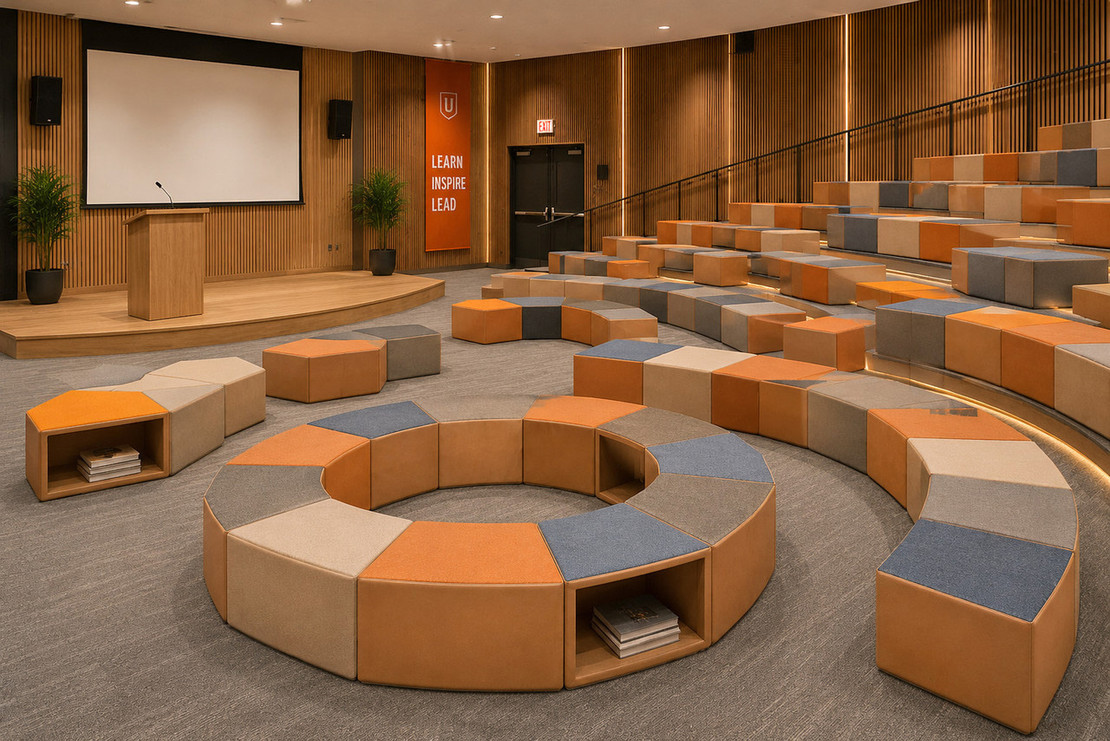
How Should Schools Spend an Approved Furniture Budget Before the Fiscal Year Ends?
When schools, universities, and other educational facilities receive an approved furniture budget, the next question is often surprisingly complicated: What furniture should we actually purchase?
As a commercial furniture manufacturer displaying products online—and specifically representing educational furniture as a separate part of our catalog—we regularly appear in searches conducted by university and school procurement departments, facility managers, designers, and administrators. These buyers often look for furniture for lunchrooms, recreational areas, student lounges, classrooms, libraries, and other common spaces.
Understanding what these facilities actually need can help procurement teams make better use of an approved budget, particularly when purchases must be completed before the end of a fiscal year.
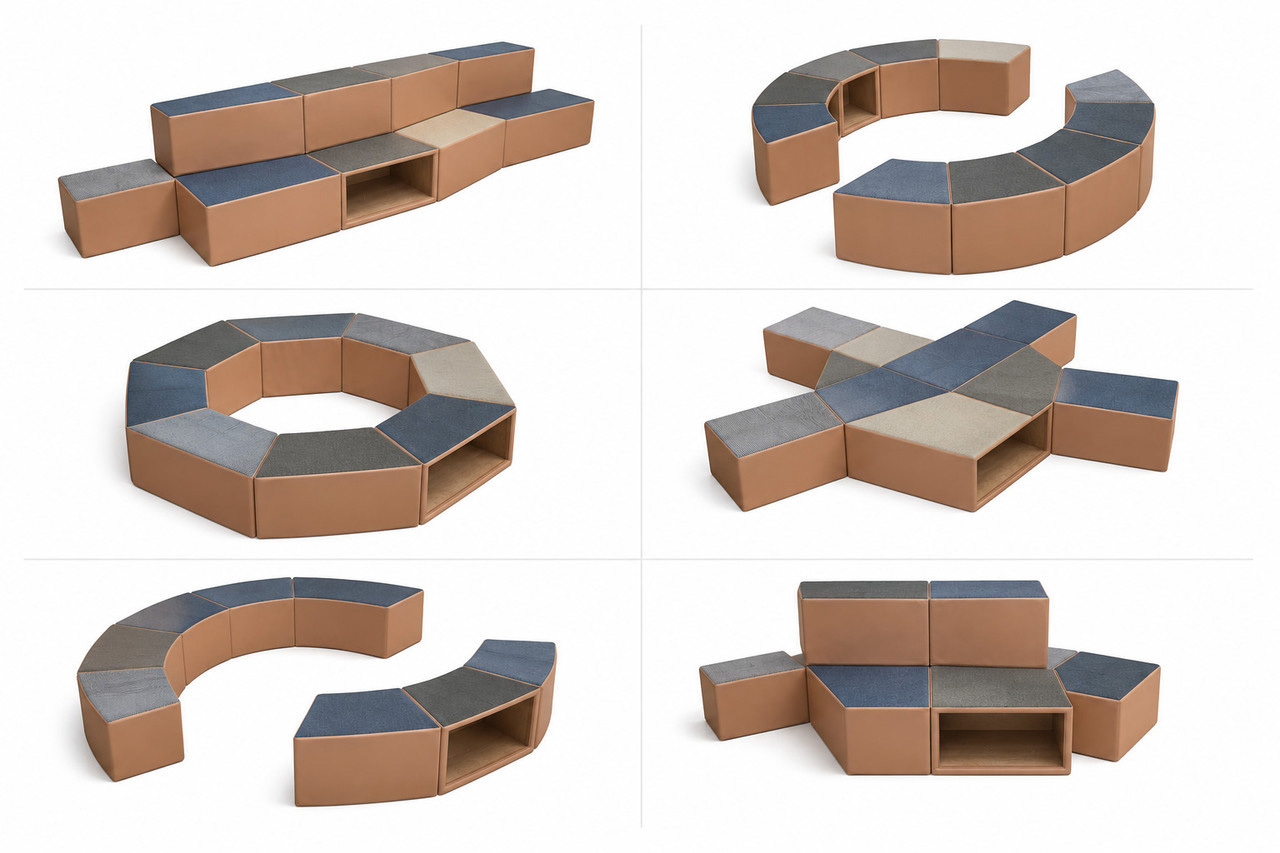
Lounge Seating Often Takes Center Stage
One of the largest furniture categories for today's educational facilities is Lounge Seating.
Modern schools and universities have many open areas where students study, socialize, wait between classes, work on laptops, or simply relax. Traditional rows of chairs do not always work well in these environments. Instead, facilities increasingly look for comfortable commercial seating that can accommodate different group sizes.
This is where Modular Seating becomes particularly useful.
A modular collection can include armless chairs, corner units, benches, ottomans, and other individual components. These pieces can be arranged together to create larger seating configurations and later rearranged when the space's needs change.
For a university or school, that flexibility can be extremely valuable. A recreational area may need seating for larger groups during one semester but require smaller collaborative arrangements later. Instead of purchasing entirely new furniture, existing modular pieces can simply be reconfigured.
Multi-Level Seating for Classrooms and Collaborative Areas
Another growing category is multi-level or tiered seating.
Educational environments have changed considerably from classrooms consisting exclusively of desks and chairs. Many schools now incorporate informal learning areas where students can gather for presentations, group discussions, reading, or collaborative projects.
Multi-level seating can help transform an open classroom or common area into a flexible learning environment.
Cubes and ottomans are another practical option. They can function as individual seats, informal gathering furniture, or supplemental seating that can easily be moved around a room.
The objective should be to purchase furniture that can serve more than one purpose.
Communal Tables Remain an Important Investment
Large Communal Tables and Educational Furniture also represent an important portion of many school and university furniture purchases.
Communal tables work particularly well in lunchrooms, libraries, student centers, study areas, and recreational spaces because they allow multiple students to use the same footprint efficiently.
They can support dining during lunch, laptops and studying between classes, collaborative projects, or informal meetings.
When purchasing communal tables, facilities should consider not only the dimensions of the tabletop but also durability, seating capacity, traffic flow, accessibility, and how the tables will interact with surrounding seating.
Don't Forget Individual Seating
Not every educational space should be completely modular or communal.
Individual chairs, lounge chairs, sofas, loveseats, side tables, and coffee tables remain an important part of the purchasing process. A successful student environment often combines several furniture types rather than relying on a single seating solution.
For example, a large student lounge might combine modular seating in the center of the room, individual lounge chairs around the perimeter, communal tables for group work, and coffee tables or occasional tables between seating areas.
This creates different environments within one larger space.
Spend the Budget With the Next Several Years in Mind
When an educational facility has an approved furniture budget—especially one that must be allocated before the fiscal year ends—the goal should not simply be to spend the remaining funds.
The better question is: What furniture will provide the greatest value to students and the facility over the next several years?
Prioritize high-traffic areas. Look for commercial-grade construction. Consider furniture that can be rearranged as enrollment and space requirements change. Measure carefully, determine how many students each area needs to accommodate, and choose products that can withstand daily institutional use.
An approved budget creates an opportunity not simply to replace old furniture, but to rethink how students use educational spaces.
The right combination of modular lounge seating, multi-level seating, cubes, communal tables, individual chairs, sofas, and occasional tables can turn underused areas into comfortable, functional spaces that support learning, collaboration, dining, and recreation for years to come.
Source: https://www.