How Schools and Universities Convert Cafeterias into Learning Spaces
Educational facilities today are being asked to do more with the space they already have. School cafeterias, university dining halls, student food courts, and hospitality training areas are no longer used only during meal periods. Administrators are increasingly looking for ways to maximize existing facilities by creating environments that support learning, collaboration, training, and community engagement throughout the day.
One of the most practical solutions is using folding tables and stackable chairs. These flexible furniture solutions allow schools and universities to quickly transform cafeteria spaces into classrooms, seminar rooms, culinary training centers, and community gathering areas without requiring major renovations.
Many educational facilities choose Folding Restaurant Tables because they provide the flexibility needed to quickly transition cafeterias into classrooms, seminar rooms, and culinary training spaces. When paired with Stackable Restaurant Chairs, schools can easily adjust room layouts based on changing enrollment, attendance, and program requirements.
Durability is equally important in high-traffic educational environments. Laminate Table Tops offer a practical solution because they resist scratches, stains, moisture, and daily wear associated with student use. Combined with Commercial Quality Upholstery on seating, these furniture solutions help maintain a professional appearance while supporting long-term performance.
For facilities with unique floor plans, Making Custom Size Table Tops for Folding Bases allows administrators to maximize seating capacity while maintaining proper traffic flow. Custom dimensions can help schools and universities create efficient layouts that support dining, cooking demonstrations, hospitality training programs, and educational seminars within the same flexible space.
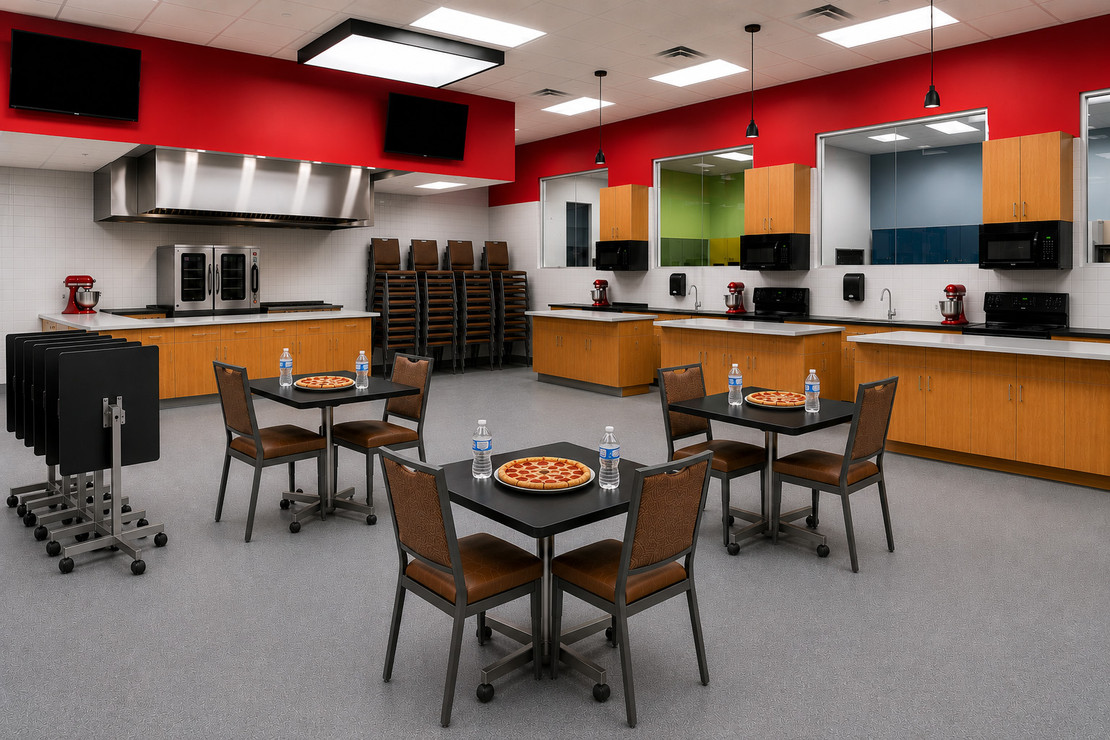
The image above illustrates exactly how a modern educational facility can accomplish this goal. During breakfast and lunch service, the space functions as a cafeteria where students can gather, dine, and socialize. Later in the day, the same room can be converted into a culinary classroom, hospitality training center, educational seminar room, or workshop space simply by rearranging furniture.
Unlike traditional fixed cafeteria seating, folding tables provide the flexibility needed to support multiple activities. Tables can be arranged in classroom rows for presentations, grouped together for collaborative learning, configured into seminar layouts, or stored away entirely when open floor space is needed. This versatility allows educational facilities to adapt quickly based on changing schedules and program requirements.
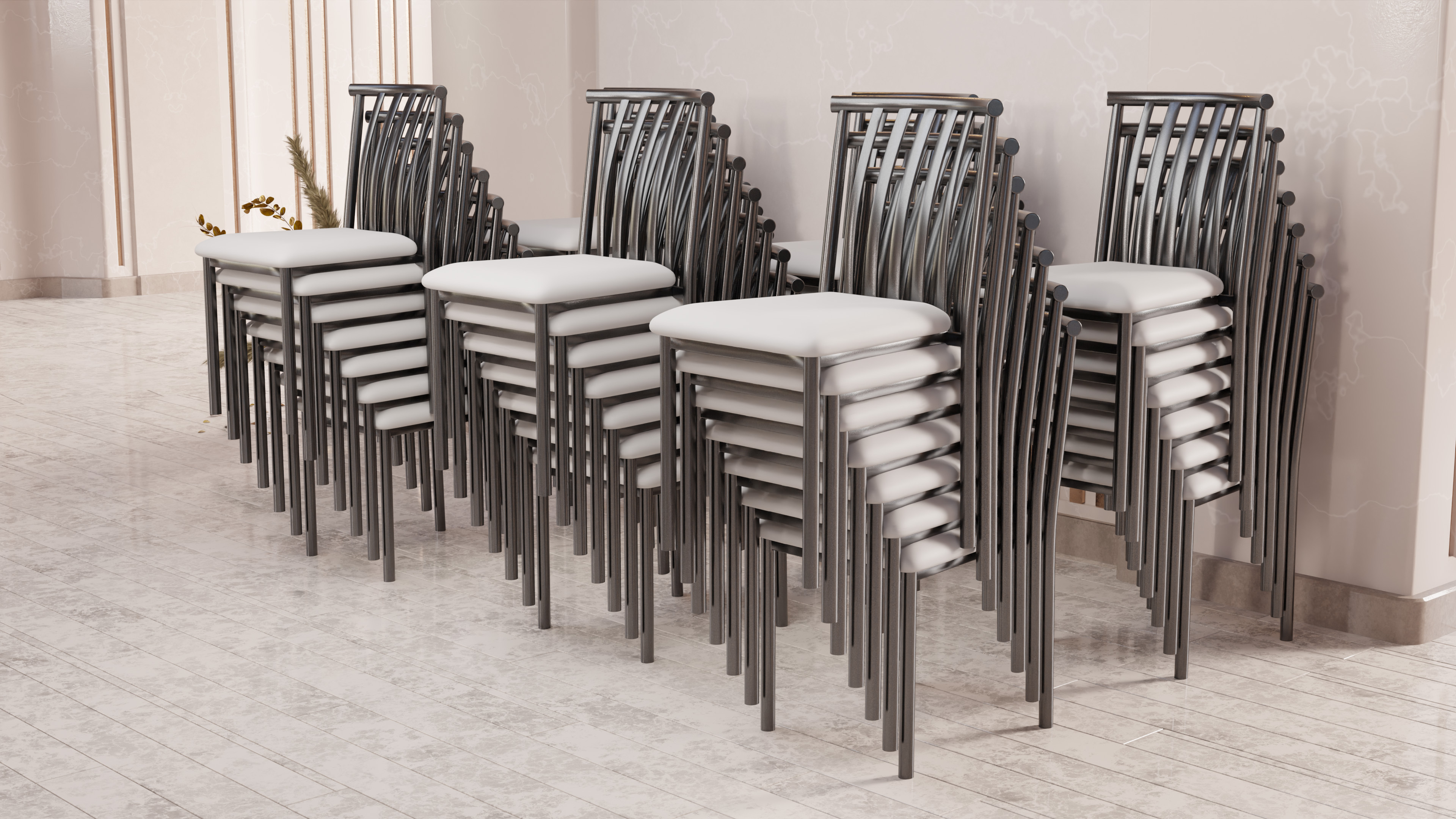
Stackable chairs offer similar advantages. When additional floor space is required for cooking demonstrations, student activities, or special events, chairs can be neatly stacked and stored in designated areas. This creates a cleaner and more organized environment while allowing staff to reconfigure the room efficiently.
Many schools and universities are also expanding culinary arts, hospitality management, nutrition, and food service programs. As shown in the image, commercial mixers, ovens, preparation stations, and demonstration areas can easily coexist with flexible furniture layouts. Students can participate in hands-on culinary instruction during one portion of the day and return the room to a dining environment before the next meal service begins.
This approach helps educational institutions maximize their investment by utilizing one room for multiple purposes. Instead of constructing separate facilities for dining, instruction, and community events, schools can create adaptable environments that support all three functions.
Beyond academic programs, cafeterias frequently host faculty meetings, student orientations, continuing education seminars, parent gatherings, community workshops, and special events. Folding tables and stackable chairs allow administrators to quickly adjust seating capacity and room configurations based on attendance requirements and event objectives.
For many educational facilities, maximizing available space has become a priority. Budget considerations often make it difficult to expand buildings or create dedicated rooms for every activity. Flexible furniture provides a practical solution by allowing a single cafeteria or food court to perform multiple roles throughout the day.
The modern cafeteria has evolved far beyond its traditional purpose. Today, it serves as a dynamic learning environment where students can dine, collaborate, learn new skills, attend seminars, and participate in hands-on educational experiences. Through the use of folding tables and stackable chairs, schools and universities can create adaptable spaces that support changing educational needs while maximizing the value of their facilities.
Q&A
Q1: Why are folding tables popular in school cafeterias and universities?
Folding tables allow facilities to quickly change room layouts for dining, classroom instruction, seminars, meetings, and special events while providing convenient storage when additional floor space is required.
Q2: What are the benefits of stackable chairs in educational facilities?
Stackable chairs improve flexibility, simplify room conversions, reduce storage requirements, and allow schools to efficiently adjust seating arrangements based on attendance and program needs.
Q3: Can a cafeteria be converted into a culinary classroom?
Yes. Many schools and universities use cafeterias for culinary arts programs, hospitality training, cooking demonstrations, nutrition education, and community workshops. Flexible furniture makes these transitions fast and efficient while maintaining a functional dining environment.
Source:https://www.