How Custom Booths Boost YouTube and Website Traffic
Every commercial furniture manufacturer wants the same outcome from trade shows, product launches, and marketing campaigns: attract attention, generate leads, and convert those leads into long-term customers.
Achieving those goals is not always easy—especially when producing custom commercial furniture.
Unlike standard inventory items, custom-built pieces require close coordination across multiple departments. When drawings arrive on the production floor, the process quickly becomes an all-hands-on-deck effort. The frame department begins building the structure while upholstery teams cut materials and prepare finishes. Designers review dimensions, production managers monitor timelines, and quality control teams ensure every detail matches the customer's vision.
Custom furniture manufacturing is a collaborative process that transforms ideas into functional products.
Many manufacturers create custom restaurant booths, lounge seating, bar stools, and tables exclusively for private projects. Once installed, these pieces are rarely seen again outside of the customer's facility.
However, some companies take a different approach.
Instead of limiting custom capabilities to private presentations, they showcase their work through catalogs, websites, social media, and trade show displays.
"Sharing your custom capabilities is one of the best ways to help customers visualize what's possible," says Jennifer Perez, Office Manager. "Why hide your ability to create custom sizes, unique layouts, and specialized seating when those solutions can help clients solve real challenges?"
Trade shows provide an ideal opportunity to bring those capabilities to life.
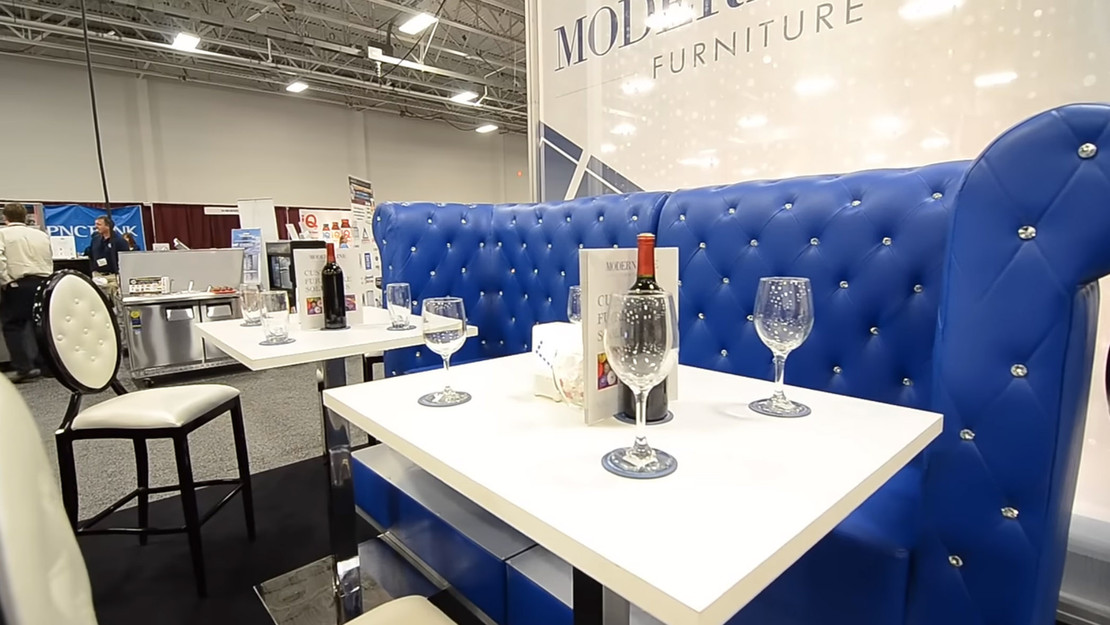
Displaying a complete restaurant environment featuring custom restaurant booths, tables, bar stools, and lounge seating allows visitors to see, touch, and experience the furniture in a real-world setting. It helps operators, designers, and business owners better understand how custom seating solutions can work within their own facilities.
A thoughtfully designed booth also becomes a powerful marketing tool.
Visitors naturally take photos, record videos, and share their experiences online. QR codes can direct attendees to product pages, project galleries, and YouTube videos. Live demonstrations and behind-the-scenes content can continue generating engagement long after the event ends.
One successful example comes from the Tri-State Food Expo in New Jersey, where a custom restaurant display generated significant attention and created a lasting digital impact.
The accompanying YouTube video received more than 500,000 views, demonstrating how a single trade show installation can continue driving awareness long after the event concludes.
Watch the video here:
Interest generated from the display also increased traffic to the company's custom furniture resources, including its custom furniture capabilities page.
Explore custom capabilities here:
The lesson is simple: don't keep your custom capabilities behind closed doors.
Show your audience what is possible. Create displays that tell a story. Build environments that visitors want to photograph, share, and remember.
When custom furniture is presented effectively, a trade show booth becomes more than an exhibit—it becomes a traffic generator for your website, YouTube channel, and future sales opportunities.
Q&A
Why should manufacturers display custom furniture at trade shows?
Trade shows allow visitors to see, touch, and experience custom furniture in person. Interactive displays help potential customers visualize how custom solutions can work in their own spaces.
How can trade show booths increase YouTube and website traffic?
Videos, QR codes, product demonstrations, and social media sharing encourage visitors to engage with digital content after the event. A successful booth experience often leads to additional website visits and video views.
What types of furniture work best for trade show displays?
Complete environments featuring restaurant booths, lounge seating, tables, and bar stools help attendees understand how products work together while showcasing customization options and manufacturing capabilities.