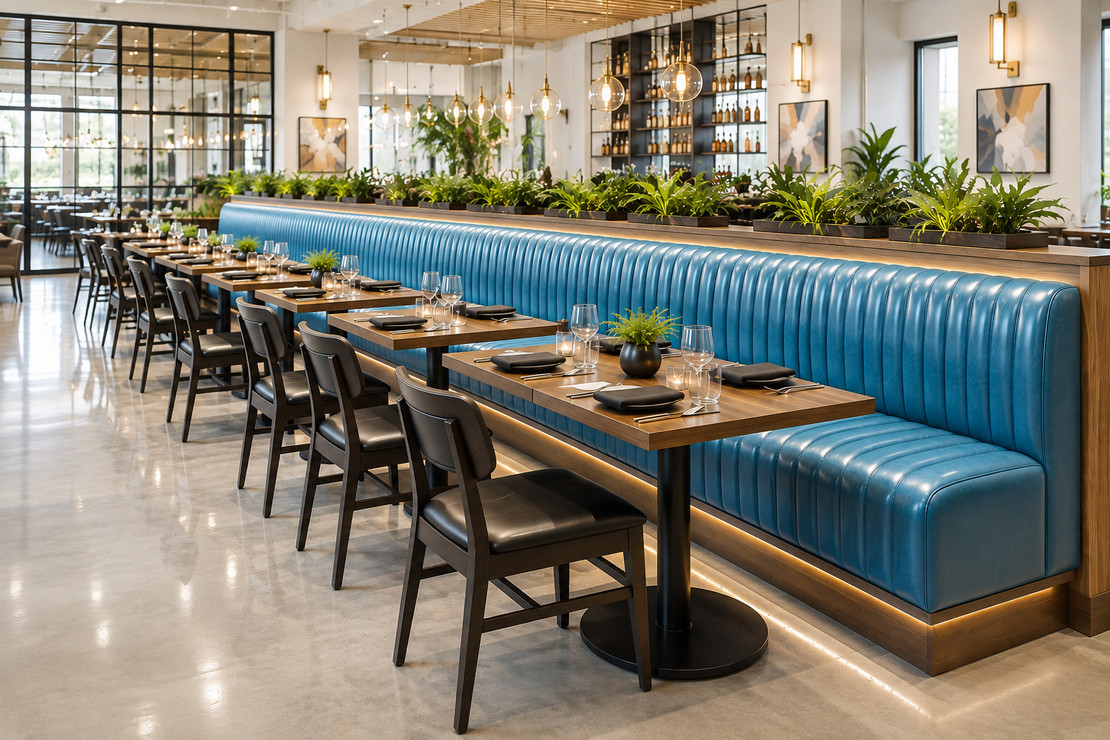
How Can Custom Made Furniture Change the Look and Layout of Restaurants and Hospitality Spaces?
Restaurant and hospitality design is about much more than selecting attractive furniture. Every space has its own dimensions, traffic patterns, architectural features, seating requirements, and brand identity. This is where Custom Made Furniture can completely change both the appearance and functionality of a commercial interior.
Standard furniture is manufactured in predetermined sizes, shapes, and configurations. While these products work well for many projects, they can sometimes force designers and restaurant operators to build their layouts around the furniture. Custom manufacturing takes the opposite approach: the furniture is designed around the space.
Custom Furniture Can Maximize the Layout
Every square foot matters in a restaurant. An oversized booth may reduce aisle space, while an undersized seating arrangement may leave valuable floor space unused.
Custom manufacturing allows booths, banquettes, communal tables, bar stools, lounge seating, and other furniture to be produced according to specific dimensions. A curved wall can accommodate a curved banquette. An unusual corner can become a productive seating area. A large open space can be transformed into a communal dining or lounge environment.
This flexibility can help designers create layouts that improve customer flow while potentially increasing usable seating capacity.
Furniture Can Define the Restaurant Style
Furniture is also one of the strongest visual elements inside a restaurant or hospitality space. The same room can look completely different depending on the furniture selected.
An industrial-style restaurant may combine exposed architectural elements with steel frames, darker finishes, wood surfaces, and commercial bar stools. These materials complement the raw character typically associated with industrial interiors.
A modern restaurant may feature cleaner furniture lines, contemporary upholstery, bold colors, and distinctive restaurant chairs. Custom colors and materials allow designers to introduce personality without changing the architecture of the space.
A traditional restaurant can use upholstered booths, round seating configurations, warmer wood tones, and sophisticated vinyl or fabric selections to create a comfortable and established atmosphere.
Custom Manufacturing Creates Design Freedom
One of the greatest advantages of custom furniture is the ability to coordinate multiple elements throughout the project.
Designers can specify dimensions, upholstery, colors, laminates, wood finishes, metal finishes, stitching details, and seating configurations. Furniture can therefore become part of the overall interior-design concept rather than simply something added after the space has been designed.
This is particularly important for restaurants, hotels, lounges, clubs, and other hospitality environments where customers experience the brand through the physical surroundings.
Turning Difficult Spaces Into Opportunities
Columns, corners, narrow walls, unusual floor plans, and architectural obstacles do not necessarily have to limit a restaurant layout. With proper planning and custom manufacturing, these challenges can become opportunities for distinctive furniture installations.
Instead of asking, “What furniture will fit here?”, designers and operators can ask, “What should we create for this space?”
That difference can transform an ordinary commercial interior into a more functional, recognizable, and memorable hospitality environment.
Ultimately, custom-made commercial furniture gives designers and operators greater control over layout, appearance, seating capacity, materials, and brand identity—helping the furniture become an integral part of the restaurant experience.
Source : https://www.