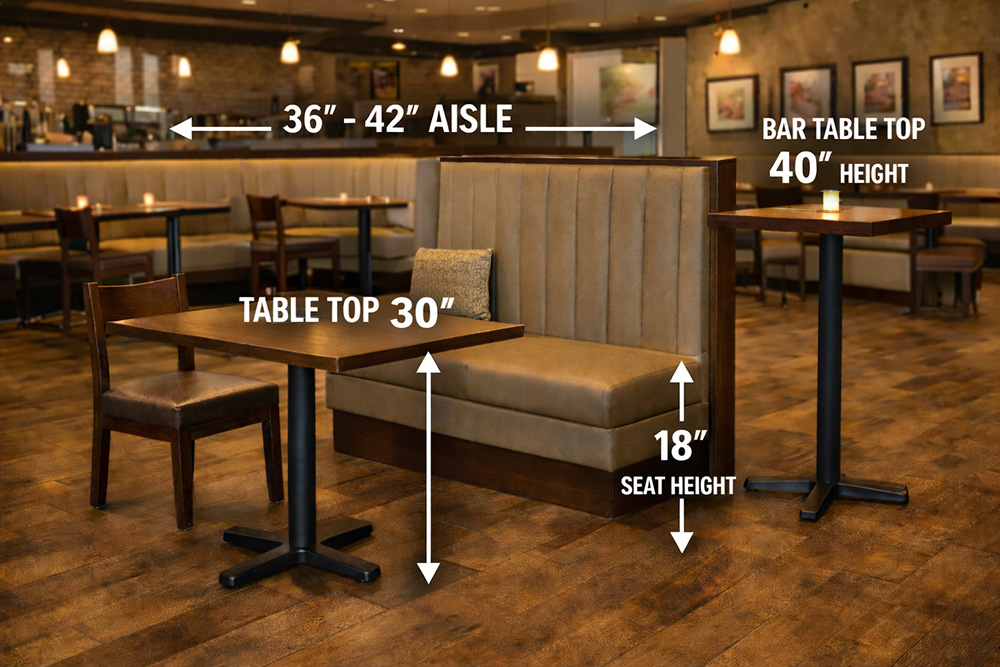
When planning a restaurant layout, operators and owners must carefully consider the spacing requirements between tables, chairs, booths, and walkways. Proper spacing plays an important role in creating a comfortable dining experience for guests while also allowing staff to move efficiently throughout the restaurant. Understanding these basic measurements before purchasing restaurant furniture can help avoid costly layout mistakes later.
One of the most important elements in restaurant design is the relationship between table height and seating height. Most restaurant dining tables are designed with a height of approximately 30 inches from the floor to the tabletop surface. This height works well with standard restaurant chairs and booth seating. Restaurant chairs typically have a seat height of around 18 inches from the floor, which allows guests to sit comfortably at the table with adequate legroom.
Booth seating follows similar measurements. Most restaurant booth seats are also built with a seating height of approximately 18 inches from the floor, ensuring that guests seated in booths have the same comfortable table alignment as those sitting in chairs.
Spacing between tables and walkways is another critical factor. Restaurants must provide enough aisle space for both guests and servers to move around the dining room comfortably. In most restaurant layouts, the recommended aisle space between tables or seating sections is between 36 and 42 inches. This range allows servers to pass through with trays and gives guests enough room to walk between tables without disturbing other diners.
Proper aisle spacing becomes especially important during peak service hours when restaurants are operating at full capacity. If tables are placed too close together, the dining room can quickly feel overcrowded and staff may have difficulty moving efficiently between tables.
Another important detail to remember is that restaurant furniture is movable. Guests may pull out chairs or shift tables slightly while dining. Because of this, operators should design layouts that allow for a small amount of flexibility without disrupting the overall spacing plan.
Planning spacing requirements before purchasing furniture can also help restaurant owners determine how many tables and seats will comfortably fit in the dining room. While maximizing seating capacity is important for revenue, maintaining proper spacing ensures that guests feel comfortable and that service runs smoothly.
By understanding standard furniture heights and recommended aisle spacing, operators can create a layout that balances seating capacity, comfort, and operational efficiency. Careful planning during the design phase will help ensure that the restaurant functions well once it opens and that both guests and staff can enjoy the space.
Key Questions About Restaurant Furniture Spacing
Q: What is the standard height for restaurant dining tables?
A: Most restaurant dining tables are approximately 30 inches high from the floor to the tabletop surface, which pairs well with standard dining chairs and booth seating.
Q: What is the typical seat height for restaurant chairs?
A: Restaurant chairs usually have a seat height of around 18 inches from the floor, allowing guests to sit comfortably at standard dining tables.
Q: What seat height is recommended for restaurant booths?
A: Booth seating is typically designed with a seat height of about 18 inches, which aligns with standard dining table heights.
Q: How much aisle space should restaurants leave between tables?
A: Restaurants typically leave 36 to 42 inches of aisle space between tables and seating areas to allow servers and guests to move comfortably throughout the dining room.
Q: Why is spacing important when buying restaurant furniture?
A: Proper spacing ensures guest comfort, improves service efficiency, and helps prevent the dining room from feeling overcrowded during busy service hours.