When purchasing restaurant booths, operators and owners often notice a wide range of pricing and options available on the market. While many booths may appear similar in photos, the difference in quality becomes clear once the furniture is installed and used in a commercial environment. Understanding what makes a high-quality restaurant booth is essential for making the right investment.
High-quality restaurant booths are typically manufactured to meet strict commercial standards. These booths are designed for durability, comfort, and long-term performance in high-traffic hospitality environments. One of the key differences begins with the internal frame construction. U.S.-manufactured booths are commonly built using solid plywood or reinforced wood frames, providing strength and stability. In contrast, lower-cost imported booths may use lighter materials that can weaken over time.

Another important factor is the upholstery material and finish. Commercial-grade vinyl and fabrics used by U.S. manufacturers are tested for durability, abrasion resistance, and fire safety compliance. Materials that meet standards such as CAL 117 and high double rub ratings are designed to handle constant use, spills, and cleaning. Imported products may not always meet these same standards, which can result in faster wear and reduced lifespan.
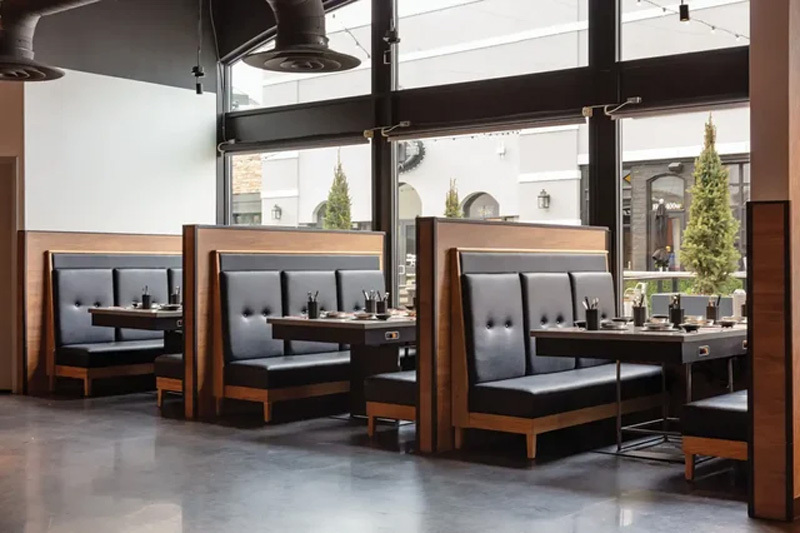
Comfort also plays a significant role in booth quality. High-density foam cushioning ensures that seating maintains its shape and support over time. Lower-density foam may feel soft initially but tends to break down quickly, leading to sagging seats and reduced comfort for guests.
One of the most noticeable differences between high-quality and lower-grade booths is the level of customization and precision. U.S. manufacturers often build booths to fit exact dimensions, allowing operators to maximize their layout and maintain a consistent design. Imported booths are typically produced in standard sizes, which may not align properly with the space.
As industry professionals often recommend, the best way to identify quality is to ask for specifications. Reviewing details such as frame construction, foam density, material ratings, and weight capacity allows buyers to clearly see the difference between domestic and imported production.
Ultimately, high-quality restaurant booths are an investment in the long-term success of the business. Choosing booths that meet U.S. standards provides better durability, comfort, and reliability, helping operators avoid costly replacements and maintain a professional appearance.
Key Questions About Restaurant Booth Quality
Q: What should I look for when evaluating restaurant booth quality?
A: Focus on frame construction, upholstery material ratings, foam density, and overall build quality. These factors determine durability and long-term performance.
Q: Why are U.S.-manufactured booths considered higher quality?
A: U.S. manufacturers typically follow strict commercial standards, use tested materials, and provide detailed specifications that ensure durability and compliance.
Q: How can I compare imported booths to domestic ones?
A: Ask for detailed specifications such as material ratings, frame construction, and weight capacity. Comparing these details will clearly show the difference in quality.