When opening or renovating a restaurant, operators often focus on layout, seating capacity, design concept, and equipment selection. However, one of the most important — and sometimes overlooked — requirements is ADA compliance. Understanding accessibility standards is not only a legal obligation but also a critical part of creating an inclusive and welcoming environment for all guests.
ADA (Americans with Disabilities Act) compliance ensures that individuals using mobility devices, including wheelchairs, can comfortably access and use restaurant seating without barriers. While the topic may initially feel technical, the practical application is straightforward when considered during the planning stage rather than after construction or installation.
The key principle behind ADA seating is simple: accessibility should feel natural and integrated, not separate or forced.
Accessibility Begins with Layout Planning
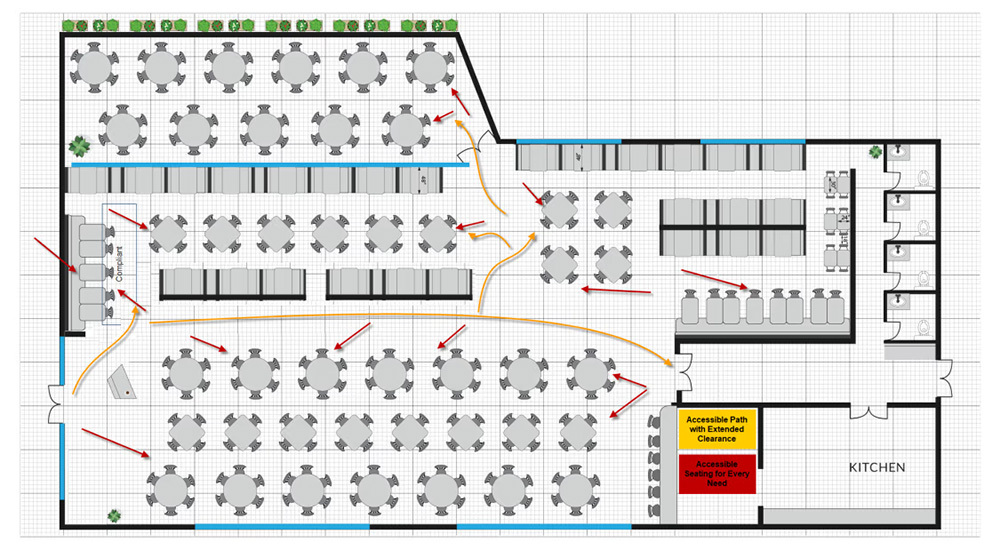
ADA compliance starts with thoughtful layout design. Restaurant operators must ensure that accessible seating locations are distributed throughout the dining area rather than isolated in one section. Guests using wheelchairs should have the same variety of seating choices and dining experiences as other patrons.
Clear circulation paths between tables, booths, and service areas are essential. Walkways must allow comfortable passage without obstacles, enabling guests to move independently throughout the space.
Planning accessibility early prevents costly modifications later and ensures a smoother inspection process before opening.
Understanding Table Accessibility
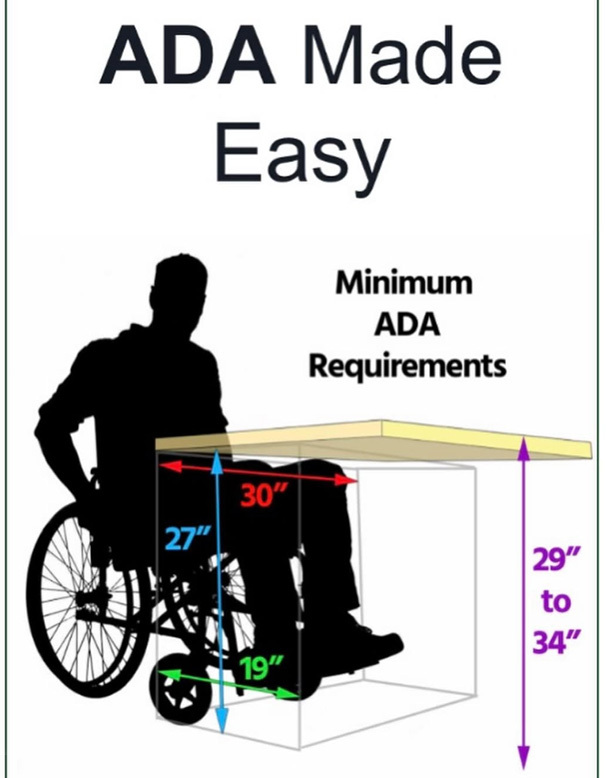
One of the most important ADA considerations involves table clearance. Accessible tables must provide enough open space underneath to allow a wheelchair to move forward comfortably without obstruction.
This requirement often influences furniture selection. Tables with pedestal bases or centrally positioned supports are typically more ADA-friendly than those with multiple legs that restrict knee and foot clearance.
Additionally, table height must fall within a comfortable range that allows guests using wheelchairs to dine naturally alongside others. When designed correctly, accessible tables blend seamlessly with the rest of the dining layout and do not appear visually different.
Booth Seating and ADA Considerations
A common question among restaurant owners is whether booths must be ADA-compliant. While traditional fixed booths can present accessibility challenges, ADA seating does not necessarily require fully modified booths.
Instead, accessibility can be achieved by incorporating removable seating options, adjacent accessible tables, or booth configurations that allow wheelchair placement at the table without obstruction. The goal is to provide comparable comfort and experience rather than identical seating structures.
Thoughtful placement of accessible tables near booth areas helps maintain design cohesion while meeting compliance standards.
Traffic Flow and Guest Experience
Accessibility is not limited to seating alone. Guests must also be able to reach entrances, host stations, restrooms, and service counters without difficulty. Maintaining appropriate spacing between furniture supports both ADA compliance and overall operational efficiency.
Interestingly, layouts designed with accessibility in mind often feel more comfortable for all guests. Wider aisles, improved circulation, and organized seating arrangements contribute to a more relaxed dining environment, benefiting staff and customers alike.
ADA compliance should therefore be viewed as an enhancement to the guest experience rather than a restriction on design creativity.
Integrating Compliance Without Compromising Design
Many operators worry that ADA requirements will limit their design vision. In reality, accessible seating can be incorporated without sacrificing aesthetics. Modern commercial furniture solutions allow accessibility features to blend naturally with overall style and concept.
Selecting adaptable tables, maintaining flexible seating zones, and planning clear circulation paths help restaurants meet compliance requirements while preserving visual identity. Accessibility can coexist with booth seating, lounge areas, and communal dining when planned thoughtfully.
The most successful restaurant designs treat accessibility as part of the initial concept rather than a last-minute adjustment.
A Practical Approach to ADA Planning
From a practical standpoint, ADA compliance becomes manageable when operators collaborate with designers, furniture providers, and layout planners early in the process. Reviewing floor plans with accessibility in mind helps identify potential challenges before installation begins.
Providing accessible seating is not only about meeting regulations — it demonstrates a commitment to inclusivity and customer care. Guests who feel comfortable navigating a space are more likely to return, recommend the establishment, and view the business positively.
Final Thoughts
ADA compliance is an essential component of responsible restaurant design. By focusing on accessible layouts, appropriate table selection, and thoughtful integration with booth seating, operators can create spaces that are both compliant and welcoming.
When accessibility is considered during the planning phase, it becomes a natural part of the dining experience rather than an obstacle. Restaurants that prioritize inclusive design not only meet regulatory requirements but also strengthen guest satisfaction and long-term reputation.
Key Questions Answered
Q: Do restaurants need to provide ADA-accessible seating throughout the dining area?
A: Yes. Accessible seating should be integrated into various sections of the restaurant so guests using mobility devices have equal dining choices.
Q: Can ADA compliance be achieved without changing the restaurant design?
A: Absolutely. With proper planning and furniture selection, accessibility can be incorporated seamlessly without compromising the overall concept.