When purchasing restaurant booth seating, operators and owners should clearly understand the functional and layout differences between single and double booths. Both options provide comfort and visual structure, but their placement and purpose within the dining room can significantly impact capacity, traffic flow, and overall atmosphere.
Making the right choice requires evaluating how each booth type supports the layout and guest experience.
Understanding Single Booth Seating
Single booths are designed with one back support that provides comfort to a single seating bench on one side. These units are most commonly positioned along perimeter walls, against architectural features, or at the ends of booth rows.
Because they occupy only one seating side, single booths help maintain wider aisles and improve circulation throughout the dining space. They are often used to complete booth runs or to transition from booth seating to other dining arrangements such as tables and chairs.
Single booths also work extremely well when combined with wall benches. This combination allows operators to maximize wall space while maintaining flexibility and comfort for guests.
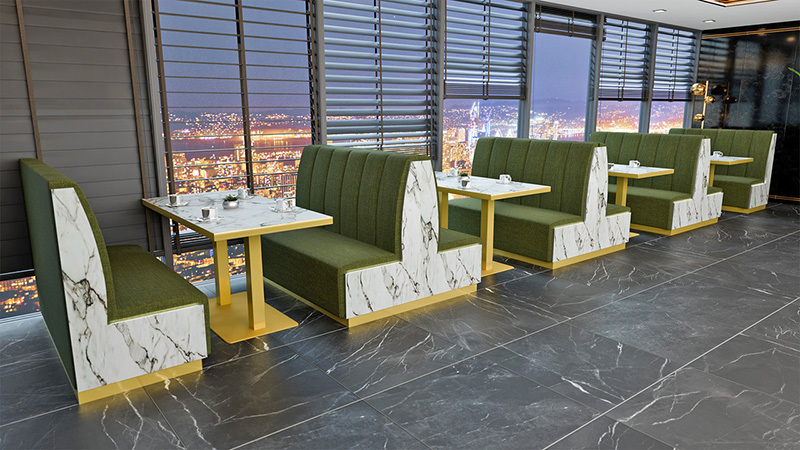
Understanding Double Booth Seating
Double booths feature a shared back support that provides comfort to two seating benches — one on each side. This configuration is a highly effective space-saving solution because one backrest serves two separate seating areas.
Double booths are commonly placed in the center of the dining room, creating organized seating rows while maximizing occupancy. They allow restaurants to increase capacity without expanding the footprint, making them particularly valuable in medium to large dining environments.
In addition to efficiency, double booths help establish visual symmetry and create a structured dining layout that feels intentional and cohesive.
Layout Flexibility and Section Creation
Strategic booth placement allows restaurant owners to naturally divide the dining room into multiple seating zones. Mixing single and double booths makes it easier to create distinct groupings without the need for additional partitions.
Single booths can define perimeter seating, while double booths create central dining clusters. This approach improves organization and enhances guest comfort by reducing the feeling of overcrowding.
Statement Booth Designs and Focal Points
Larger double-back booth structures can also serve as visual centerpieces. Creating extended double booth runs or feature installations in the middle of the dining room adds character and draws guest attention.
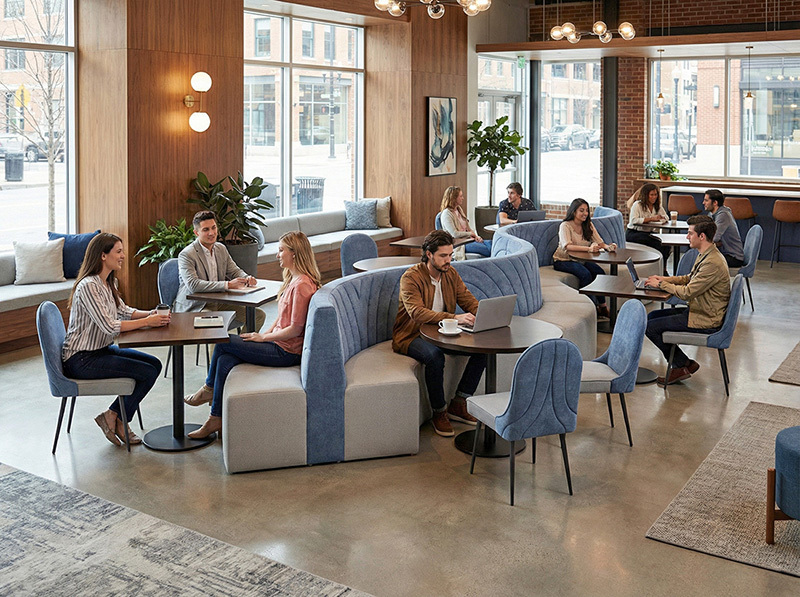
Additionally, U-shaped and L-shaped booth configurations provide more private seating experiences. These layouts are ideal for families, groups, and VIP seating areas while maintaining consistency with standard single and double booth arrangements.
Single and double booths each serve a distinct purpose in restaurant layout planning. Single booths maximize perimeter efficiency and circulation, while double booths increase capacity and create organized seating zones.
By combining both strategically, operators can design dining rooms that balance comfort, functionality, and visual appeal — ultimately improving guest satisfaction and operational performance.
Key Questions Answered
Q: Where should single booths be placed?
A: Single booths are typically positioned along walls, at the ends of booth runs, or in areas where maintaining aisle width is important.
Q: Why are double booths considered space savers?
A: A shared back support serves two seating areas, increasing capacity without requiring additional floor space.
Q: Can single and double booths be combined in one layout?
A: Yes. Mixing both types allows operators to create organized sections and improve traffic flow.
Q: What booth style works best for VIP or group seating?
A: U-shaped and L-shaped booth configurations provide enhanced privacy and are ideal for group dining experiences.
Q: Do booths improve restaurant atmosphere?
A: Yes. Booth seating creates structure, comfort, and visual appeal, which positively influences guest experience.