When planning to furnish golf facilities, owners and operators must first understand one important fact: not all golf facilities are created equal. The furniture strategy for an indoor simulator venue is completely different from an outdoor golf entertainment concept or a traditional country club.
Modern golf facilities range from compact simulator bays to full-scale hospitality environments. Each requires thoughtful planning based on spacing, guest flow, comfort, and operational efficiency.
Indoor Golf Simulators: Precision Planning Is Key
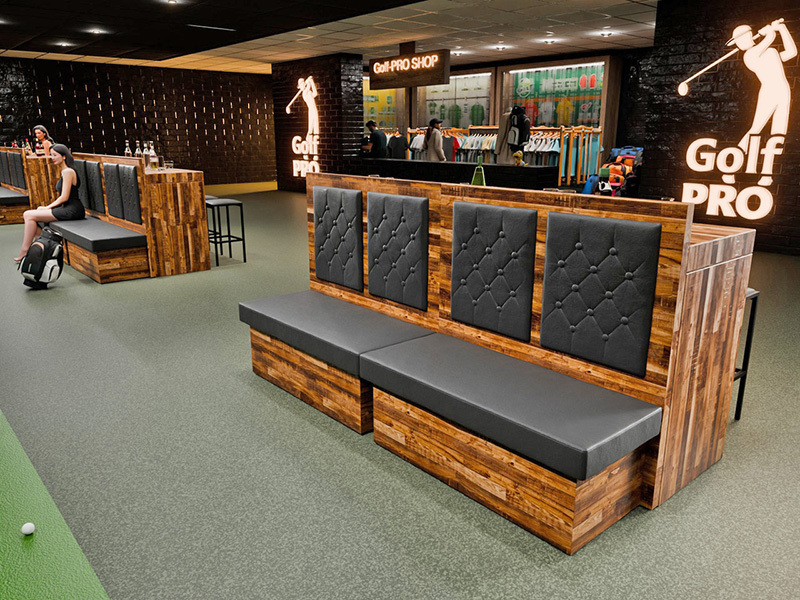
Indoor golf simulator venues are highly dependent on space efficiency. Each simulator bay typically requires 8 to 10 feet of linear seating space, and proper measurement of both length and depth is critical before selecting furniture.
Owners must evaluate:
-
Total bay width
-
Distance from screen to seating
-
Player swing clearance
-
Walking access behind the seating area
A well-planned bay maximizes both comfort and capacity.
For example, an 8-foot sofa can comfortably seat four guests. Adding a 96" bar-height table behind the sofa with four bar stools increases capacity to eight people per bay. This setup allows active players to rotate comfortably while others have designated seating to rest and socialize.
Typical indoor golf simulator furniture packages may include:
-
8-foot sofa or sectional unit
-
Coffee or accent table with storage
-
96" bar table
-
Four commercial-grade bar stools
The goal is simple: provide every player a comfortable place to sit while waiting their turn without crowding the play area.
Outdoor Golf Simulators: Comfort & Durability First
Outdoor golf simulator facilities operate differently. Space is usually more generous, but environmental factors become the priority.
Owners must provide:
-
Permanent canopy, roof, or awning structures
-
Flat, stable flooring
-
Clear separation between bays using columns or light partitions
-
Easy walking access behind seating
Comfort is essential, but so is weather resistance.
Outdoor seating commonly includes:
-
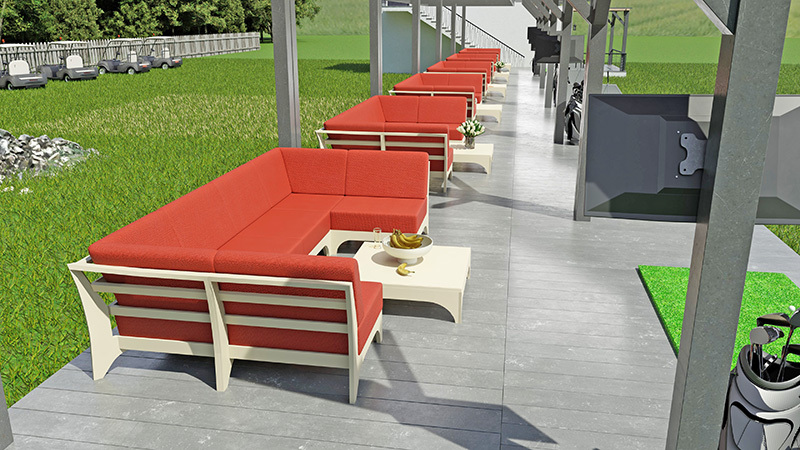
U-shaped sectional sofas around 10 feet in length
-
Equal left and right side configuration
-
Front coffee or storage tables
-
24"–30" bar-height tables with two to three stools
Because furniture is exposed to the elements, materials must be selected carefully.
Recommended specifications:
-
Sunbrella® fabric covers and cushions
-
Seaboard composite frames
-
Weather-resistant finishes
-
Non-corrosive hardware
Durability is not optional outdoors. Materials must withstand UV exposure, moisture, and temperature changes without fading or structural compromise.
Country Club Indoor Facilities: Full Hospitality Furnishing
Country club environments require a broader furnishing approach. These facilities often combine golf, dining, lounge, and social spaces into one integrated experience.
Dining areas typically include:
-
36", 48", or 60" round tables
-
Seating for four to eight guests
-
Coordinated chairs matching club aesthetic
Lounge and cigar rooms demand elevated comfort and traditional elegance.
Recommended seating:
-
High-back armchairs
-
Generous seat depth
-
Strong lumbar support
-
High armrests for relaxed posture
Unlike simulator venues focused on rotation and turnover, country club furnishings prioritize comfort, prestige, and extended dwell time.
Space Planning & Flow Considerations
Regardless of facility type, successful furnishing requires careful attention to circulation and layout.
Key considerations include:
-
Clear walking paths between bays
-
Easy access for staff
-
Defined seating zones
-
Storage solutions for golf bags and personal items
-
Proper spacing between furniture and play areas
Every layout must balance comfort with operational flow.
Final Thoughts
Furnishing modern golf facilities requires understanding the specific type of operation. Indoor simulators demand precise spacing and smart seating packages. Outdoor venues require weather-resistant materials and comfort-driven layouts. Country clubs focus on full-scale hospitality furnishing with elevated aesthetics.
The right furniture plan increases player comfort, maximizes seating capacity per bay, and strengthens the overall guest experience.
Key Questions Answered
Q: How much seating should each indoor simulator bay provide?
A: Ideally, each bay should accommodate 6–8 guests, ensuring players have comfortable seating while waiting their turn.
Q: What materials are best for outdoor golf simulator seating?
A: Weather-resistant materials such as Sunbrella® fabrics, Seaboard composite frames, and corrosion-resistant hardware are recommended.
Q: How long should a simulator sofa be?
A: An 8-foot sofa is common for seating four guests comfortably without overcrowding the play area.
Q: What tables work best in golf simulator lounges?
A: 96" bar-height tables behind sofas and 24"–30" bar tables in outdoor setups are popular for maximizing capacity.
Q: How is furnishing a country club different from a simulator venue?
A: Country clubs require full hospitality furnishing, including dining tables, lounge seating, and high-comfort armchairs designed for extended relaxation.