Furnishing a bowling center requires thoughtful planning. Modern bowling venues are no longer just about lanes — they are social entertainment spaces where seating comfort, layout efficiency, and durability directly impact guest experience and revenue.
When furnishing bowling centers or alleys, operators must first determine the scope of the project. Some facilities require full-scale furnishing that integrates lanes and dining areas, while others focus strictly on furnishing the lane seating itself.
Understanding the difference helps guide the right furniture strategy.
A. Full-Scale Furnishing: Lanes and Restaurant Integration
In full-scale entertainment bowling centers, the lanes and restaurant areas should work together both visually and functionally. Guests typically move from bowling to dining and beverage areas, so maintaining a cohesive design strengthens brand identity and improves flow.
Lane Seating Strategy
Lane seating is the primary focal point. Planning begins with determining how many single and double seating units are needed per lane grouping.
-
Single seating units are positioned at the ends of lane groupings where no additional lanes continue.
-
Double seating units are installed back-to-back between lanes to maximize space efficiency.
A popular configuration includes:
-
Double back-to-back seating
-
A center shared table with built-in storage
-
Optional 96" bar tables behind seating
-
Four bar stools per bar-height table
The shared center table plays an important role. It provides space for drinks, scoring tablets, personal items, and food trays while keeping the area organized.
Adding a 96" bar table behind the main seating increases capacity and allows guests waiting their turn to sit comfortably without crowding the players.
Restaurant Continuation & Cohesive Design
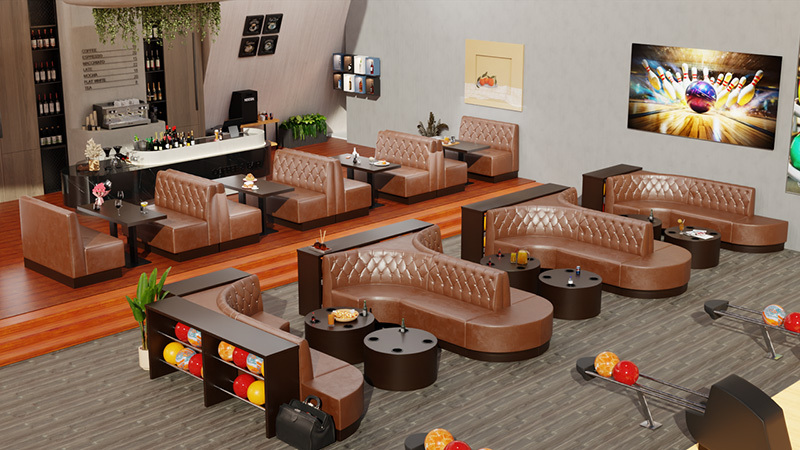
When a bowling center includes a restaurant or dining section, furniture models should feel connected. Sectionals in the lane area can be complemented by restaurant booths and lounge seating that follow a similar design language.
Maintaining consistency in upholstery, stitching style, and overall shape reinforces brand identity. When guests finish bowling, transitioning into the restaurant area should feel seamless — not like entering a completely different environment.
B. Furnishing Lanes Only
In some projects, operators choose to furnish only the bowling lanes. In this case, life becomes simpler.
Using the same furniture model consistently across all lanes is often the most efficient solution. Standardizing lane seating:
-
Simplifies layout planning
-
Reduces production variables
-
Maintains a uniform look
-
Streamlines replacement and repeat orders
Lane-only furnishing projects focus on durability, comfort, and spacing. Since bowling environments are high-traffic areas, furniture must withstand constant movement, sliding, and impact.
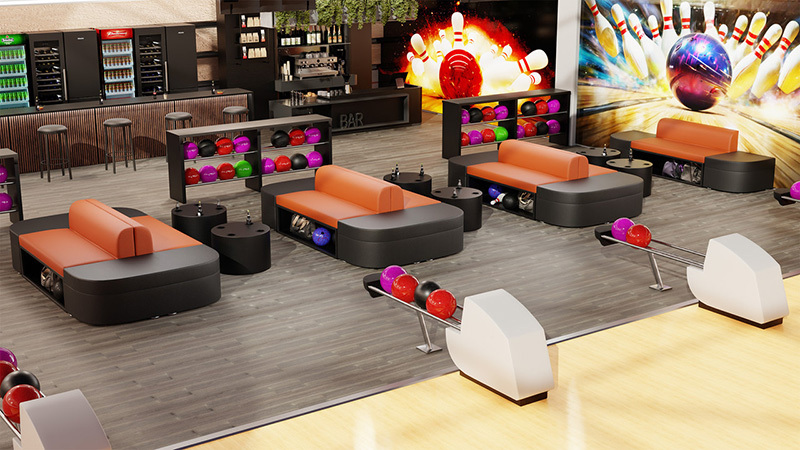
Key considerations include:
-
Heavy-duty frame construction
-
High-density foam cushions
-
Commercial-grade vinyl or fabric
-
Easy-to-clean surfaces
-
Proper spacing behind seating for safe walking paths
The goal is to create a comfortable player zone that supports rotation while maintaining clear circulation behind the lanes.
Final Consideration
Whether furnishing a full entertainment complex or simply upgrading lane seating, planning must prioritize durability, flow, and guest comfort. Consistent furniture models, shared tables with storage, and properly spaced seating layouts improve both functionality and visual cohesion.
Well-planned lane furniture increases capacity, reduces clutter, and enhances the overall guest experience.
Key Questions Answered
Q: What type of seating works best for bowling lanes?
A: Double back-to-back seating with a shared center table is a popular and space-efficient configuration.
Q: Should lane seating match the restaurant furniture?
A: In full-scale facilities, maintaining a cohesive design strengthens brand identity and creates a seamless guest experience.
Q: Is it acceptable to furnish only the lanes?
A: Yes. Many operators choose to standardize lane seating with the same furniture model for simplicity and consistency.
Q: What materials are recommended for bowling centers?
A: Commercial-grade vinyl, high-density foam, and heavy-duty frames are recommended for durability and easy maintenance.
Q: Why are shared tables with storage important?
A: They provide organized space for drinks, personal items, and scoring equipment while keeping walkways clear.