Communal tables are not one-size-fits-all. The way you select a communal table for a public space is very different from how you select one for a food court or an educational facility. While they all serve the purpose of shared seating, the function, materials, and construction must match the environment where the table will be used.
Understanding this difference is what prevents costly mistakes and ensures the tables last for many years with minimal maintenance.
Public Spaces
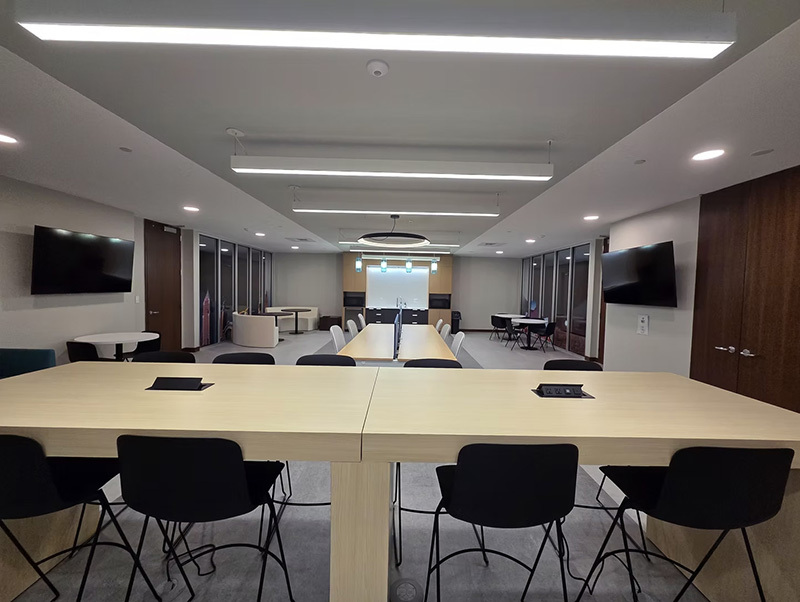
In public gathering areas such as lobbies, malls, waiting areas, transit hubs, and mixed-use spaces, communal tables serve both a design and a functional purpose. People sit for meetings, wait, work on laptops, and charge devices.
A key question here is whether the tables should be bolted to the floor or remain free-standing. In many public environments, securing the tables adds stability and security.
The ideal construction is a metal frame with gunmetal powder coating paired with thick, durable table tops that are practically maintenance-free. A 2” thick High Pressure Laminate surface such as Wilsonart or Formica is highly recommended. These finishes resist scratches, stains, and constant cleaning.
Adding charging stations is very important in public spaces because the table becomes a functional workstation for visitors.
Food Courts
Food courts require a completely different approach. Here, tables are exposed to hot plates, food spills, drinks, and constant cleaning all day long.
Charging stations are typically not necessary. What matters most is a surface that can handle abuse and still look good after years of use.
Thinscape-style composite surfaces are an excellent choice. They are sleek, extremely durable, moisture-resistant, and easy to wipe down quickly between guests. This makes them a smart long-term investment for high-turnover dining areas.
Educational Facilities
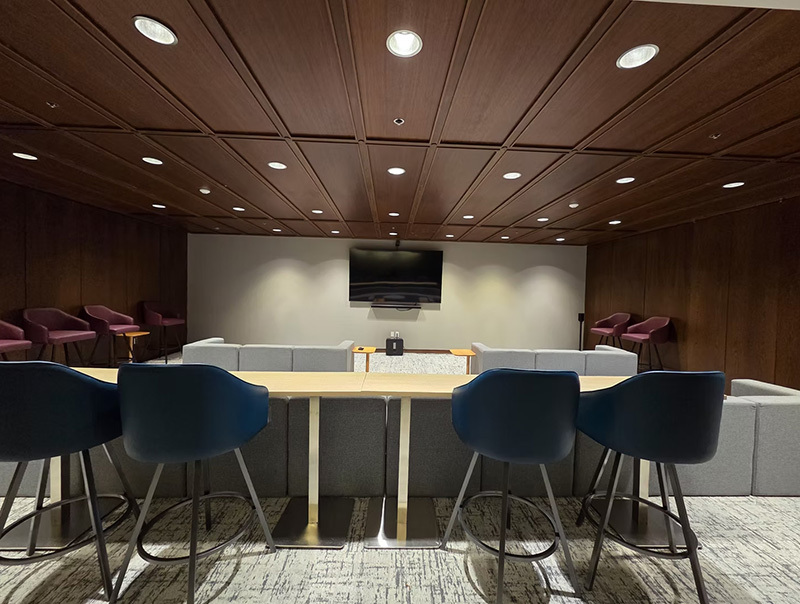
Schools, colleges, and universities use communal tables as study and collaboration stations. Students sit for long periods with books, laptops, and notebooks.
These spaces benefit from fully laminated wood-finish communal tables that create a warm, inviting study environment while remaining durable.
Charging stations are very important here, but instead of placing them on the surface, they can be installed on side columns or legs, preserving more usable table space for studying.
Leg spacing and table length should allow many students to sit comfortably without obstruction.
Communal tables succeed when they are selected based on where they will be used, not just how they look.
Q & A — Communal Table Selection
Q: Should communal tables in public spaces be bolted down?
A: In many public areas, bolting them down improves stability and security, especially in high-traffic environments.
Q: What surface is best for public communal tables?
A: 2” thick High Pressure Laminate such as Wilsonart or Formica for durability and easy maintenance.
Q: What works best in food courts?
A: Thinscape composite surfaces that resist heat, spills, and constant cleaning.
Q: Are charging stations necessary for all communal tables?
A: No. They are important in public and educational spaces but usually not needed in food courts.
Q: How should communal tables be designed for schools and universities?
A: Laminated wood-finish tables with charging stations on side columns to maximize study surface space.