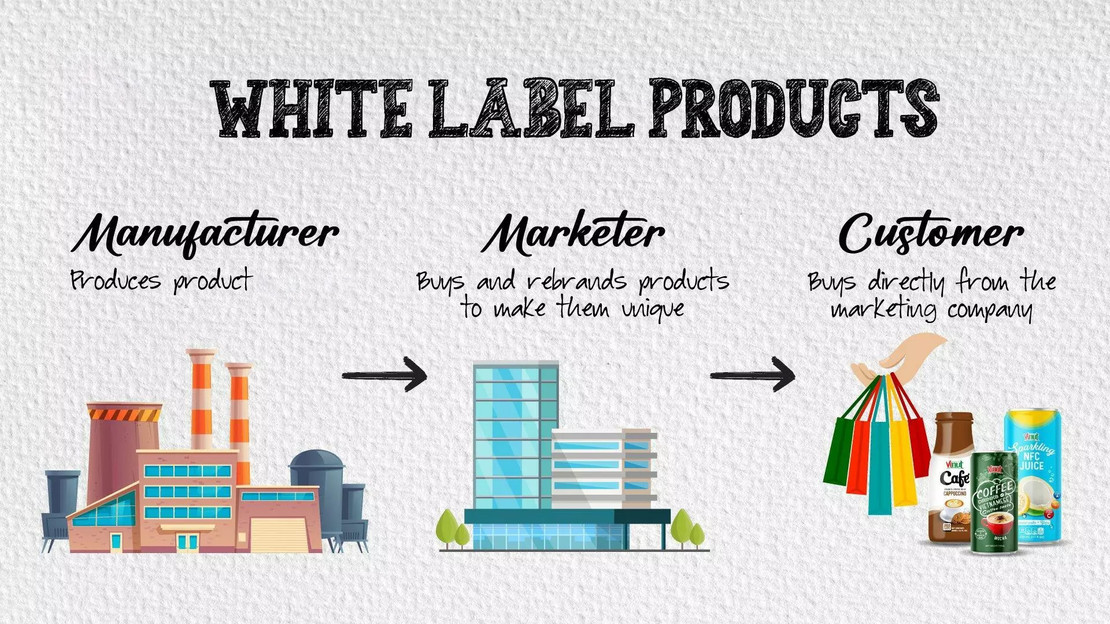
White Label vs Private Label Manufacturing
In the commercial furniture industry, few terms are used more often — and misunderstood more frequently — than white label and private label manufacturing. On the surface, they sound similar. Both allow retailers, franchise groups, and contract accounts to sell furniture under their own brand name. But behind the scenes, the difference between the two can shape timelines, budgets, exclusivity, and long-term brand strategy.
The conversation usually begins the same way.
A client calls and asks, “Do you do white label manufacturing?”
Or sometimes, “Can you handle private label production for us?”
What many clients do not initially realize is the level of infrastructure already in place.
When it comes to white label manufacturing, preparation makes all the difference.
“Many clients are not aware that we have plenty of templates already loaded in our system for CNC operation,” says Jennifer Perez, Office Manager at Modern Line Furniture. “Hundreds of templates can be used, or current ones can be modified based on the existing models in our library. For white label manufacturing, we are much more set up and ready with many options.”
This is where white label manufacturing becomes powerful.
White label programs are typically built on proven foundations. Manufacturers maintain libraries of frames, engineered structures, and CNC-ready templates that have already been tested for durability and performance. Instead of starting from zero, retailers and contract buyers can select an existing model and modify dimensions, stitching patterns, finishes, or upholstery selections.
Because the structural framework already exists, timelines are faster. Development costs are lower. Production remains consistent.
For franchise groups rolling out multiple locations, this efficiency is critical. For retailers building proprietary catalogs, it allows speed without sacrificing brand identity. For contract accounts, it ensures repeatability across projects.
White label manufacturing is about controlled customization built on proven engineering.
Private label manufacturing, however, takes the conversation further.
When clients call about private label programs, the options are clearly explained.
“We can either go back to the drawing board and start from scratch,” Jennifer explains, “or check our current collection and see if we can implement any of the existing models and make a few changes. That approach helps with cost efficiency and shortens the time frame significantly.” This distinction matters.
True private label manufacturing may involve Designing and Engineering custom frames.
Developing new stitching layouts and testing on prototypes. It is a deeper investment in development and brand ownership.
However, even within private label programs, strategic adaptation can reduce unnecessary cost and delay. Sometimes the smartest path is not total reinvention, but intelligent refinement of an existing foundation.
With these two similar — but not identical — approaches, flexibility becomes a competitive advantage.
“With these options, we are ahead of our competition,” Jennifer adds. And in many ways, that is accurate. The ability to offer both CNC-ready white label efficiency and fully engineered private label development gives clients real choices instead of rigid pathways.
From a manufacturing standpoint, both models can meet commercial-grade standards. Fire compliance, weight capacity engineering, abrasion resistance, and repeat production consistency remain constant priorities. The difference lies not in quality — but in design ownership and development depth.
White label builds on what already works.
Private label builds something uniquely yours.
Interestingly, many brands evolve between the two. A retailer may begin with white label collections to establish momentum. As brand identity strengthens, certain product lines may transition into private label exclusivity. The two strategies are not opposites — they are stages within growth.
What remains constant is partnership.
Commercial furniture must perform. It must survive constant use, cleaning cycles, and environmental exposure. Whether adapting CNC templates or engineering from scratch, the goal is the same: deliver a product that protects the client’s brand reputation long after installation.
The real question is not which model is better.
The real question is which model aligns with your timeline, budget, and brand objectives.
If speed and cost efficiency are priorities, white label manufacturing offers a structured, scalable path.
If exclusivity and signature design are central to your brand strategy, a private label may be the right investment.
Either way, understanding the difference allows businesses to make informed decisions instead of reactive ones.
If you have an upcoming project and want to explore either white label or private label manufacturing, give us a call and see how we can help — one way or the other — to support and potentially save your project contact us sales@modernlinefurniture.
Key Questions Answered
Q: Is white label manufacturing faster than private label?
A: Yes. Because white label programs rely on existing CNC templates and engineered models, development timelines are typically shorter.
Q: Does private label always mean starting from scratch?
A: Not necessarily. While private label can begin with new designs, strategic modification of existing models can improve cost efficiency and reduce lead time.
Q: Are white label products less durable?
A: No. Both white label and private label products can meet the same commercial-grade standards when properly engineered.
Q: Which model is better for franchise rollouts?
A: White label works well for fast, consistent rollouts. Private labels are ideal when exclusivity and brand identity are priorities.
Q: Can a business use both strategies?
A: Absolutely. Many growing brands begin with white label programs and later expand into private label collections.