Where to Start When Furnishing Food Courts and Cafeterias with Tables and Chairs
Furnishing a food court or cafeteria may seem simple at first—tables, chairs, and enough seating to accommodate daily traffic. But anyone who has worked on these projects knows that these environments are among the most demanding in commercial design. Food courts and cafeterias operate at high volume, experience constant movement, and must balance durability, comfort, safety, and compliance all at once.
Knowing where to start makes all the difference.
Understanding the Environment Comes First
Before selecting any Restaurant tables or chairs, it is essential to understand how the space will actually be used. Food courts and cafeterias are high-turnover environments. Guests arrive in waves—students between classes, employees during lunch breaks, travelers passing through terminals, or families visiting entertainment venues. Furniture in these spaces is in near-constant use from opening to closing.
This level of activity places significant stress on seating and tables. Chairs are pulled, pushed, moved, and occasionally misused. Tables must remain stable while handling food trays, drinks, backpacks, and frequent cleaning. Choosing furniture that is not designed for these conditions often leads to premature wear, safety issues, and costly replacements.
Planning Layout, Traffic Flow, and Compliance
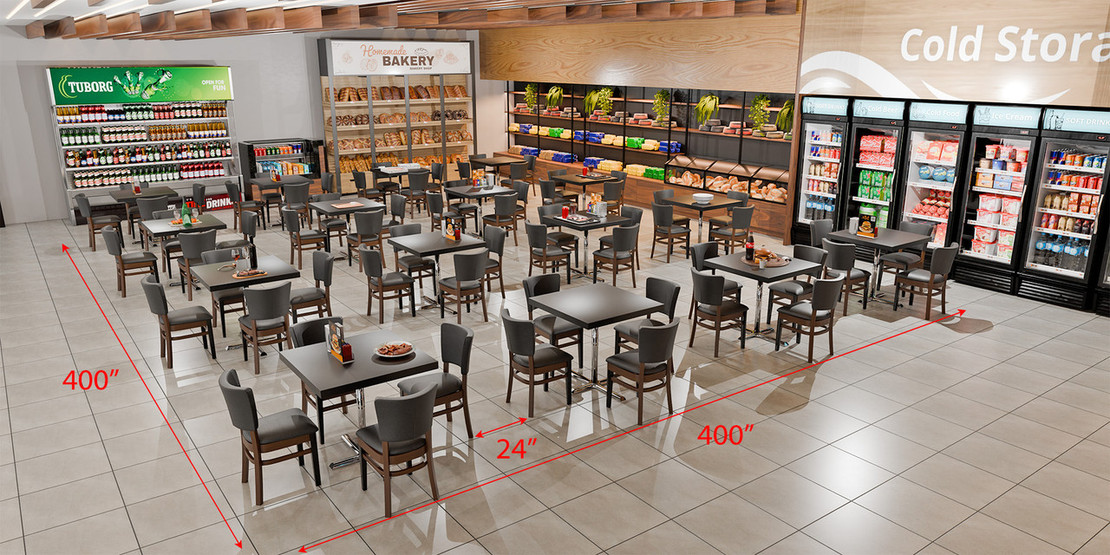
When an owner or facility manager is faced with the task of designing a food court or cafeteria layout, the challenge goes far beyond simply placing Cafeteria tables and chairs. One of the most important considerations is creating a proper flow of traffic—from food counters to bar tables and traditional dining tables—while ensuring safety, comfort, and compliance.
Fire codes, aisle clearances, and pedestrian pathways must be addressed early in the planning process. Guests are often carrying trays, drinks, or even hot plates, so clear and unobstructed walkways are essential. Proper spacing between tables allows people to move freely without congestion, especially during peak hours.
Equally important is ADA compliance. Wheelchair accessibility must be carefully integrated into the layout, including adequate turning radius, table heights, and approach clearances. These are not optional considerations—they are required standards when furnishing public dining spaces.
“This is something we deal with on a daily basis,” says Veronika Lemeshenkova, Sales Manager at Modern Line Furniture. “We’re very familiar with the process and always help our clients answer these questions correctly.”
One of the most common questions she receives is about aisle width. “Should the clearance be 36 inches?” clients often ask. “Yes, that is correct,” Veronika explains, “and in many cases, even wider spacing makes the space feel more comfortable and easier to navigate.”
Using Tables Strategically
Tables are the backbone of any food court or cafeteria. Their size, height, and placement directly affect how efficiently the space functions. Communal tables are often a smart starting point, as they increase seating capacity without overcrowding and encourage quick turnover during busy periods.
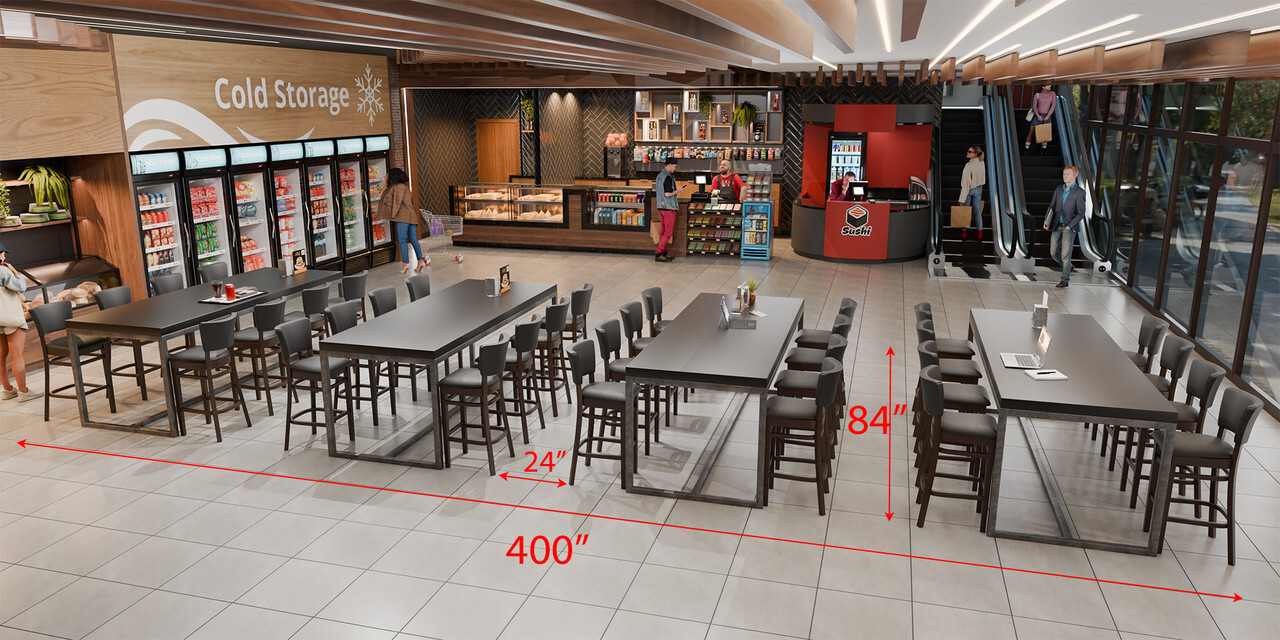
Another important consideration is whether to incorporate elevated bar-height tables toward the ends or perimeter of the food court. Bar-height tables improve visibility across the space, allowing patrons to easily see food counters, seating availability, and foot traffic. This layout also helps guests stay visually connected with family members or friends who may still be ordering or browsing nearby.
Base design is often overlooked, but stability is critical. Heavy-duty table bases with wide footprints reduce tipping risks and perform better under constant use.
Choosing Chairs Built for Constant Use
When it comes to seating, durability is non-negotiable. “We always tell our customers that chairs and bar stools need to be bulletproof,” Veronika says. In practical terms, that means fully welded frames, reinforced construction, and a minimum weight capacity of 350 pounds or more.
Food courts experience continuous activity, and seating must be able to withstand heavy traffic without loosening, wobbling, or failing over time. Stackable chairs are often preferred in cafeterias and institutional dining areas, as they allow staff to clear floors quickly for cleaning or reconfiguration.
In some layouts, fixed seating such as benches or banquettes can be incorporated along walls or columns. These solutions maximize seating while keeping main walkways open and uncluttered.
Color, Comfort, and Guest Experience
Color selection plays an important role in food court design. Vibrant, well-chosen finishes energize the space and create a welcoming atmosphere. Guests are more likely to sit, eat, and relax when furniture feels inviting, clean, and visually appealing.
Comfort also matters. While food courts are not designed for long stays, seating must still provide proper support. Chairs with well-designed proportions and quality materials improve the overall dining experience and encourage repeat visits.
Cleaning, Maintenance, and Long-Term Value
Cleaning and maintenance must be considered from the very beginning. Food courts and cafeterias are cleaned daily—often multiple times per day—so furniture must withstand frequent wiping, sanitizing, and exposure to standard commercial cleaning chemicals.
Tables with sealed surfaces, properly coated metal frames, and non-porous seating materials help prevent staining, corrosion, and premature wear. Furniture that is easy to clean allows staff to work efficiently and keeps the space looking presentable throughout the day.
From a long-term perspective, commercial-grade furniture offers better value. While lower-cost options may seem appealing upfront, they often lead to higher expenses over time due to repairs, replacements, and downtime. Durable furniture protects the investment and reduces operational headaches.
Furnishing food courts and cafeterias successfully requires thoughtful planning, an understanding of traffic flow, and careful selection of tables and chairs designed for high-traffic public environments. When layout, compliance, durability, comfort, and maintenance are addressed from the start, the result is a dining space that functions smoothly and performs reliably for years.
For more information please visit our website https://www.