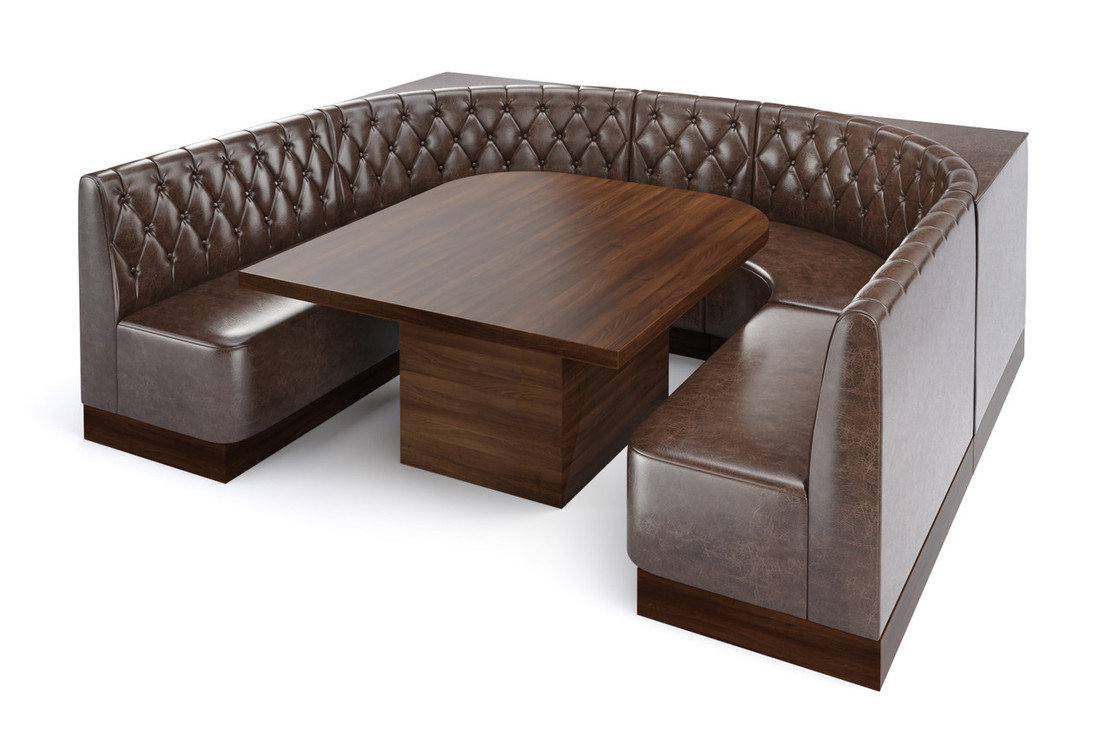
Tufted Upholstered Restaurant Booths: What to Know when Furnishing Your space.
When furnishing restaurant booth areas, many operators get excited about the wide range of upholstery options available. Booth seating can be designed in several styles, including tufted upholstery with or without buttons, channel backs, and flat upholstery. Each option offers a different visual appeal and level of maintenance.
However, understanding how these designs perform in a real restaurant environment is key to making the right decision.
With over 20 years of manufacturing experience, Yana Katliarova, CFO of Modern Line Furniture, shares a practical approach:
“The best and simplest solution is to apply tufting and buttons only to the back support panels of the booths, while keeping the seating surface flat without stitching. This allows the seat to be easily cleaned and maintained.”
Tufted designs with buttons on seating surfaces may look attractive initially, but they can create challenges over time. Food particles and debris can get trapped around the buttons, making cleaning more difficult. In addition, as customers slide in and out of the booth, there is a higher risk of buttons loosening, getting caught, or being pulled out, which can lead to frequent repairs or replacements.
On the other hand, keeping tufting and buttons on the back panels only provides the desired design element without affecting functionality. The backrest is less exposed to wear and tear, making it a safer and more practical area for decorative details.
Material selection also plays an important role when designing tufted upholstered restaurant booths. Some upholstery materials are pre-manufactured with tufted or channel stitching patterns, which can be a great option for achieving a consistent and refined look without additional customization. These pre-designed materials can save time and provide a clean, uniform appearance across multiple units. However, it is important to use them strategically within the booth design. Applying tufted or channel-stitched materials to the back support panels is often the most practical approach, as these areas are less exposed to heavy wear and are primarily used for visual impact. For seating surfaces, it is highly recommended to use a smooth, flat upholstery material. Flat surfaces are easier to clean, maintain, and sanitize, especially in high-traffic restaurant environments where spills and constant use are common. Combining pre-designed tufted materials on the back with flat upholstery on the seat creates a balanced solution—offering both aesthetic appeal and long-term durability. This approach allows operators to maintain a high-end look while ensuring the furniture performs efficiently in everyday use.
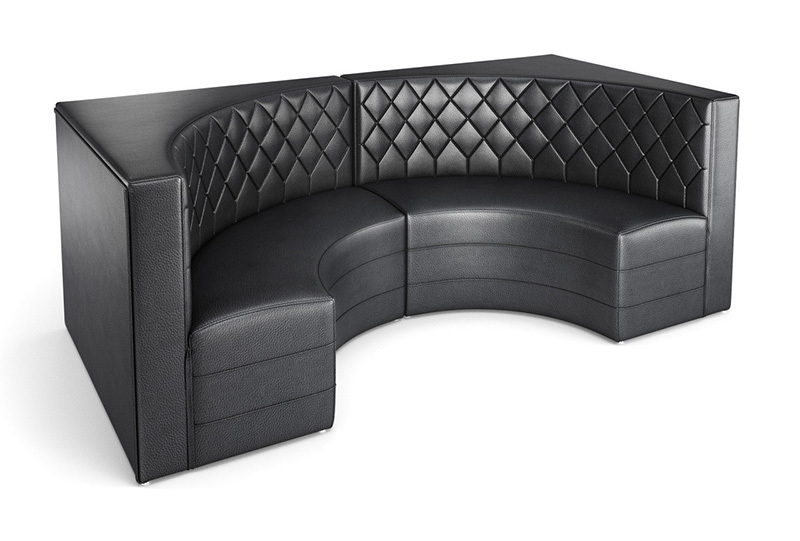
Ultimately, the goal is to balance aesthetics with durability and ease of maintenance. Choosing the right upholstery style ensures that your restaurant booths not only look great but also perform well in a high-traffic environment.
Key Questions
Q: Are tufted restaurant booths with buttons a good option?
A: Yes, tufted booths add a stylish and upscale look, but buttons should ideally be placed on the back panels rather than the seating surface for better durability and maintenance.
Q: Why should seating surfaces be kept flat?
A: Flat seating surfaces are easier to clean and maintain. They prevent food from getting trapped and reduce the risk of damage caused by daily use.
Q: What is the best balance between design and functionality?
A: A combination of tufted back panels for visual appeal and flat seating for practicality offers the best balance of style, comfort, and long-term performance.