Restaurant Seating Layout: Understanding Proper Spacing and Walkways
When setting up a restaurant for its grand opening, operators and owners must carefully consider the space requirements between tables, chairs, booths, and walkways. Proper spacing is essential not only for comfort but also for efficient service and overall safety. The layout of the seating area directly affects how guests move through the space and how easily servers can perform their duties during busy service hours.
One of the first questions operators often ask is how much space should be left between tables and aisles. Restaurants must balance seating capacity with comfort and functionality. While maximizing the number of seats may seem beneficial from a revenue perspective, overcrowding the dining room can negatively affect the guest experience and make it difficult for staff to move efficiently.
In addition to table spacing, owners must also consider the proper heights for dining tables, bar tables, chairs, and bar stools. When these elements are correctly matched, guests are able to sit comfortably and enjoy their dining experience. When they are not aligned properly, seating may feel awkward or uncomfortable.
There are also building and safety guidelines that apply to restaurants, particularly regarding walkways and emergency exits. However, it is important to remember that furniture in a restaurant is movable. During normal operations, guests may pull chairs closer, move tables slightly, or adjust seating positions. Because of this, restaurant layouts must allow enough flexibility for small adjustments without disrupting the overall flow of the space.
“We have seen it all over the years,” says Jennifer Perez, office manager. “Operators often ask about the correct measurements when placing furniture. While every restaurant has its own layout, there are common guidelines that help ensure comfort and efficiency.”
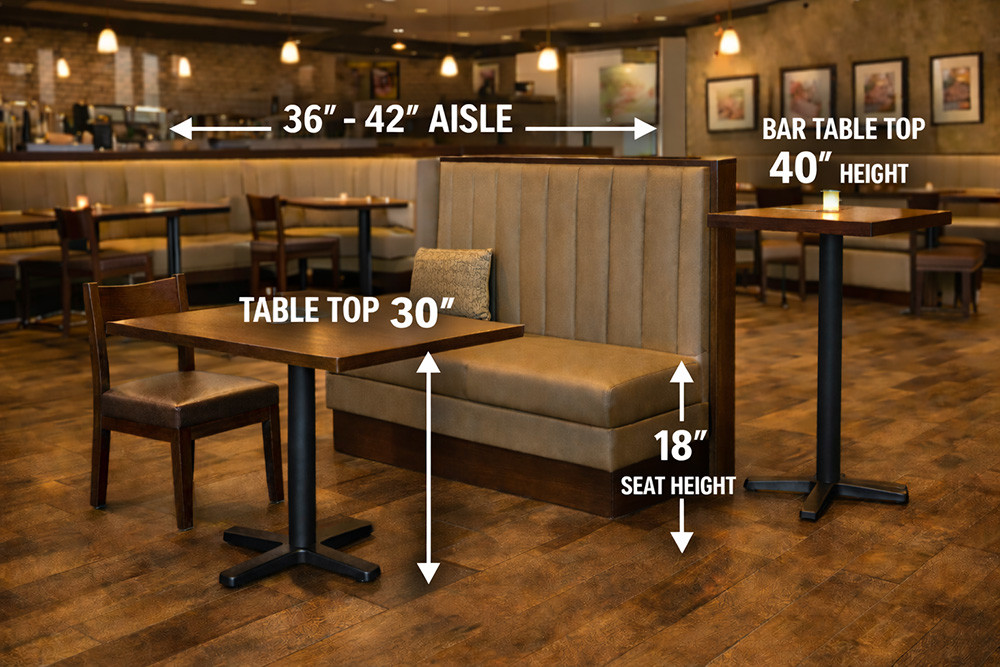
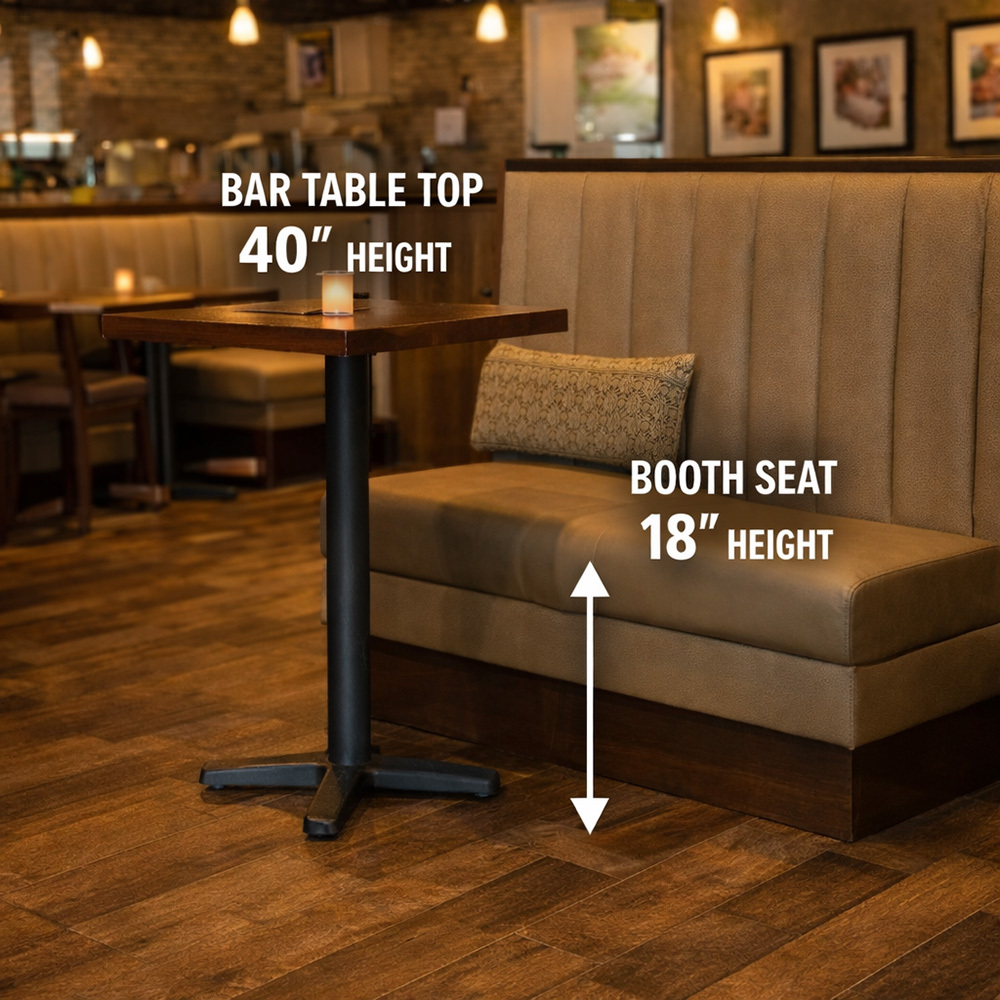
Bar areas are often one of the most active parts of a restaurant. Bar tables typically measure 40 to 42 inches from the floor to the tabletop surface, depending on the thickness of the table top. These heights are designed to pair properly with standard bar stools.
Bar stools themselves usually have a seat height of approximately 30 inches from the floor to the seating surface. To provide comfortable access for guests, each bar stool should have about 24 inches (2 feet) of space. This allows customers to easily sit down, stand up, and move around without interfering with neighboring seats.
Dining tables are lower than bar tables and typically measure 29 to 31 inches from the floor to the tabletop surface. This height works well with standard dining chairs and booth seating.
Restaurant chairs generally have a seat height of around 18 inches from the floor. In terms of width, each chair usually requires approximately 24 inches of seating space per guest. This measurement helps ensure that diners do not feel crowded while seated at the table.
Restaurant booths follow similar seating height guidelines. Booth seats are typically around 18 inches from the floor to the seating surface, allowing guests to sit comfortably at standard dining tables.
Another important factor in restaurant layout is aisle spacing. Walkways between seating sections should provide enough room for servers carrying trays and for guests entering or leaving their tables. Narrow aisles can create congestion and make service more difficult during busy hours.
Proper spacing is especially important in high-traffic areas such as near the entrance, near the kitchen doors, or around the bar area. Operators should always plan layouts that allow staff to move safely and efficiently throughout the restaurant.
Ultimately, designing the right seating layout requires balancing comfort, safety, and seating capacity. When spacing guidelines are followed, restaurants can create an environment where guests feel relaxed and staff can work efficiently. Careful planning at the beginning of the project helps ensure that the restaurant operates smoothly once it opens its doors to the public.
Key Questions About Restaurant Seating Layout
Q: Why is proper spacing important in restaurant seating layouts?
A: Proper spacing ensures that guests feel comfortable while dining and allows staff to move efficiently throughout the restaurant. Adequate spacing also helps prevent congestion during busy service hours and contributes to a more pleasant dining experience.
Q: What is the standard height for restaurant dining tables?
A: Dining tables are typically 29 to 31 inches high from the floor to the tabletop surface. This height works well with standard dining chairs and booth seating.
Q: How much space should be allowed for bar stools?
A: Each bar stool should have approximately 24 inches (2 feet) of space. This allows customers to comfortably enter and exit their seats without interfering with others sitting nearby.
Q: What is the typical seat height for restaurant chairs and booths?
A: Restaurant chairs and booth seating generally have a seat height of around 18 inches from the floor, which aligns comfortably with standard dining table heights.
Q: Why should operators consider aisle width when designing a restaurant layout?
A: Adequate aisle space allows servers to carry food and beverages safely while also giving guests room to move between tables. Proper walkways improve both operational efficiency and customer comfort.