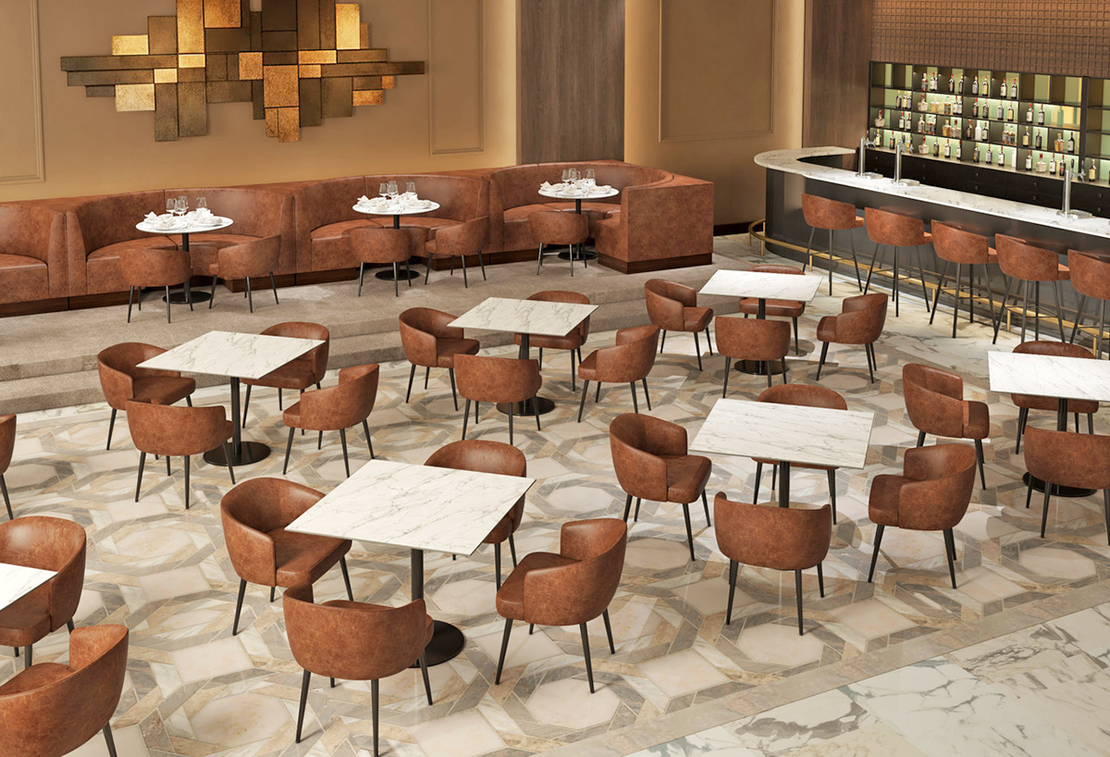
How to Create a Clean, Cohesive Dining Layout with Tables and Chairs
Designing a dining space for restaurants, cafeterias, or food courts is not simply about selecting attractive tables and chairs. The true goal is to create a layout that feels organized, comfortable, and easy to navigate — a space where guests can dine without congestion while staff can move efficiently during peak hours.
A clean, cohesive dining layout begins with understanding the operational needs of the facility. Before selecting furniture sizes or arranging seating, operators must first evaluate several key factors that shape how tables and chairs should be positioned.
Start with the Fundamentals
When working on a food service space, operators should carefully consider:
-
The overall square footage of the facility
-
Maximum occupancy allowed by building code
-
Expected guest volume during peak hours
-
Typical party size and dining patterns
-
Required clearance between tables for circulation
These questions form the foundation of any successful dining layout. Without answering them first, furniture placement often becomes reactive rather than strategic.
Small Settings in Open Spaces Create Better Cohesion
In large, open dining environments — such as food courts, cafeterias, or casual dining halls — creating smaller seating groupings often produces the cleanest and most functional result.
Round tables between 24″ and 32″ paired with two to three chairs help break up expansive spaces into comfortable micro-zones. These smaller arrangements prevent the dining floor from feeling overwhelming while allowing guests to find seating quickly without disrupting traffic flow.
Even when occupancy levels allow higher capacity, smaller table groupings typically improve accessibility to exits, maintain visibility across the space, and reduce congestion during busy periods.
Understanding Guest Behavior and Party Size
Dining layouts should reflect how guests actually use the space.
In food courts, schools, and workplace cafeterias, guests commonly arrive in small groups of one to three people. Smaller round tables are ideal because they support quick turnover and efficient seating without occupying unnecessary floor space.
Restaurants, however, often serve larger parties — families, social groups, and celebrations. In these environments, guests may prefer booth seating or larger tables designed to accommodate four to six people comfortably.
This difference directly impacts table selection. Larger rectangular or square tables ranging from 30″ × 48″ to 30″ × 60″ allow flexibility for group dining while maintaining a cohesive layout when paired with coordinated commercial chairs.
Balancing small and large seating options ensures that all guest types can be accommodated without disrupting the overall visual consistency.
Maintaining Proper Clearance and Circulation
One of the most important elements of a cohesive dining layout is spacing. Tables positioned too closely together create discomfort for guests and restrict movement for servers. Conversely, excessive spacing reduces seating capacity and can make the space feel disconnected.
Maintaining clear aisles between tables supports:
-
Comfortable guest movement
-
Efficient service flow
-
Safe evacuation routes
-
Visual organization
A thoughtful mixture of table sizes combined with consistent spacing allows the dining floor to feel structured rather than crowded.
Mixing Tables and Booths for Balance
This arrangement improves traffic flow by keeping high-volume circulation paths open while offering varied seating experiences for different guest preferences.
Coordinating upholstery, finishes, and table shapes ensures that the mixture of booths and freestanding seating still feels unified.
True cohesion is not achieved by making every table identical, but by creating a consistent design language. Matching chair styles, coordinated tabletop finishes, and repeatable layouts help guests intuitively understand the space.
Simplicity in furniture selection also makes maintenance easier and supports long-term operational efficiency.
Whether the environment is a food court, school cafeteria, or full-service restaurant, a cohesive layout should feel intentional, balanced, and easy to navigate.
A clean dining layout is the result of careful planning, not just furniture selection. By understanding occupancy requirements, guest behavior, and circulation needs, operators can create spaces that maximize comfort, efficiency, and visual harmony.
Smaller table groupings in open environments, larger tables for group dining, and consistent spacing between seating elements all contribute to a unified dining experience that supports both guests and staff.
For more information or assistance with layout planning and furniture selection, contact our sales professionals at Support@modernlinefurniture.
Key Questions Answered
Q: What table size works best in food courts and cafeterias?
A: Smaller round tables between 24″ and 32″ with two to three chairs are ideal for quick seating and efficient turnover.
Q: How much spacing should be maintained between tables?
A: Adequate clearance should allow comfortable guest movement and server access while maintaining code compliance and visual organization.
Q: Should restaurants use only tables or mix seating types?
A: A combination of tables and booths often creates the most balanced and functional layout.
Q: How does guest group size influence table selection?
A: Smaller groups benefit from compact tables, while family dining and larger gatherings require rectangular or larger square table configurations.
Q: What creates cohesion in a dining layout?
A: Consistent furniture styles, coordinated finishes, thoughtful spacing, and repeatable seating arrangements contribute to a unified dining environment.