Commercial Furniture That Works Best in Nightclubs and Comedy Clubs
When furnishing a nightclub, comedy club, or any live-entertainment venue, one fundamental truth must be understood from the very beginning: furniture plays a critical role in maximizing both space and revenue. These environments are not static. They must constantly accommodate high foot traffic, changing crowd sizes, and multiple seating layouts—all while maintaining comfort, safety, and a clear line of sight to the stage.
Unlike traditional restaurants, clubs demand furniture that adapts. A nightclub may host a live concert one night and a DJ-driven event the next. A comedy club may alternate between table seating, lounge seating, and open walkways depending on the performer and audience size. In both cases, the ability to reconfigure furniture quickly and efficiently is essential. Well-planned layouts allow staff to move freely, guests to circulate comfortably, and venues to transition between events without sacrificing capacity or atmosphere.
Flexibility Is the Foundation of Club Furniture Design
In most clubs, seating must work double duty. On one night, the room may prioritize standing room and bar service; on another, it may require seated guests focused entirely on a stage. This is where flexible furniture planning becomes the backbone of a successful venue.
In many nightclub settings, bar stools positioned around bar tables form the foundation of the layout. Bar-height seating encourages movement, keeps guests engaged with the energy of the room, and allows operators to maximize drink service without overcrowding the floor. This configuration is especially effective for high-volume nights where turnover and traffic flow are key to profitability.
On other nights—particularly during comedy performances or ticketed shows—restaurant chairs placed around tables offer a more structured and comfortable seating environment. Guests are seated longer, sightlines become more important, and stability matters. The ability to switch between bar-height seating and standard dining-height seating allows operators to adapt the same square footage to completely different experiences without changing the core layout of the room.
Lounge Seating and the Power of VIP Areas
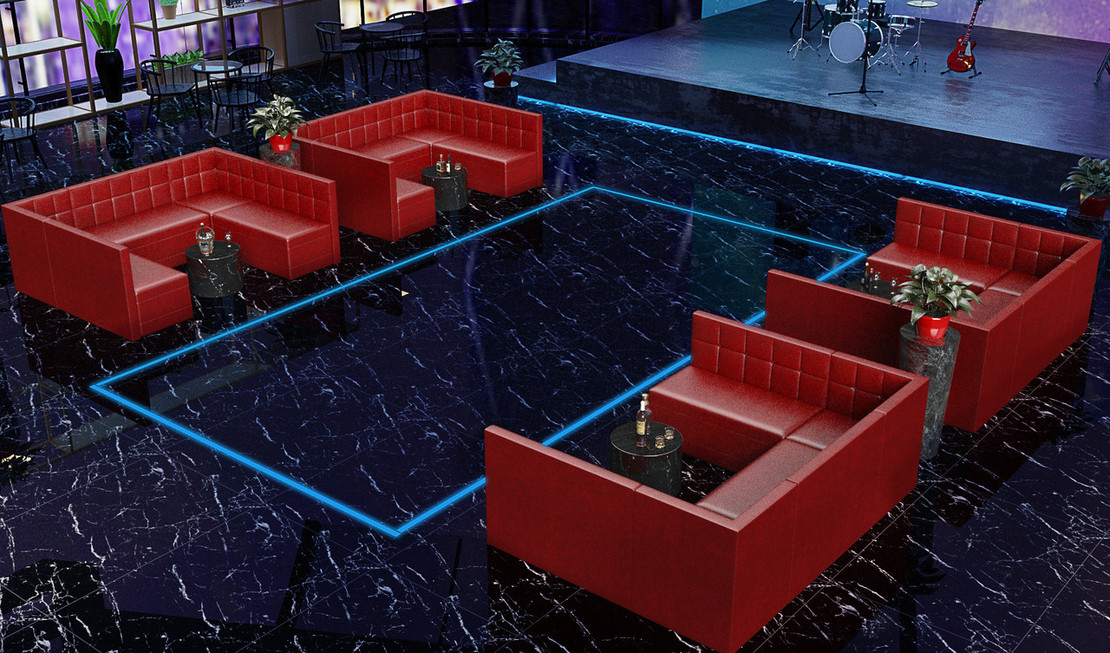
When it comes to premium experiences, lounge seating plays a defining role. VIP sections are no longer just roped-off areas; they are designed experiences meant to increase per-guest spend and elevate the overall atmosphere of the venue.
Modular lounge seating allows club owners to create intimate group seating without permanently dividing the space. Sofas, corner units, and low lounge tables can be arranged to define VIP zones while keeping the venue visually open. These setups are ideal for bottle service, private group seating, or premium ticket holders who want comfort without losing connection to the main room.
Smart lounge planning also allows clubs to capitalize on areas that are often overlooked. Spaces beneath staircases, along perimeter walls, or near structural columns can be transformed into high-value seating zones with the right furniture. Instead of leaving these areas unused, modular lounge configurations turn them into revenue-producing sections that feel intentional rather than improvised.
Traffic Flow and Sightlines Matter More Than Style Alone
In both nightclubs and comedy clubs, furniture placement directly impacts how guests move through the space. Poor layouts can create bottlenecks, block exits, or interfere with service—all of which hurt both safety and sales.
Low-profile seating, clean table bases, and well-spaced layouts ensure that walkways remain clear and staff can move efficiently. In comedy clubs especially, sightlines are critical. Chairs, booths, and lounge seating must be positioned so guests can see the stage comfortably without obstruction. Furniture that is too bulky or improperly spaced can ruin the experience, regardless of how attractive it looks.
This is why commercial-grade furniture designed specifically for hospitality environments is essential. Residential furniture may look appealing, but it often fails in durability, weight capacity, and layout efficiency. Clubs need seating that holds up under constant use while maintaining a consistent, professional appearance night after night.
Durability, Safety, and Long-Term Performance
Nightclubs and comedy clubs place extreme demands on furniture. Seating must withstand constant movement, high traffic, and frequent reconfigurations. Upholstery must be easy to clean and resistant to spills. Frames must support repeated use without loosening or wobbling. Weight capacity and structural integrity are not optional—they are requirements.
Commercial furniture designed for clubs is built with these realities in mind. Reinforced frames, contract-grade upholstery, and stable table bases ensure longevity and reduce long-term replacement costs. When furniture performs reliably, operators can focus on programming, service, and guest experience instead of constant maintenance or repairs.
Safety is another critical factor. Clear pathways, stable seating, and proper spacing help reduce the risk of accidents while keeping venues compliant with local regulations. Well-designed furniture layouts support both guest comfort and operational peace of mind.
Revenue per Square Foot Starts with Furniture Choices
Every square foot in a nightclub or comedy club must earn its keep. Furniture is one of the most powerful tools for achieving this. The right seating mix allows operators to scale capacity, adjust pricing tiers, and increase average spend without expanding the physical footprint of the venue.
Bar seating supports high turnover. Lounge seating supports premium pricing. Table seating supports ticketed events and longer stays. When these elements are thoughtfully combined, furniture becomes a revenue strategy—not just a design choice.
Successful venues understand that furniture is not static décor. It is an operational asset that directly affects guest flow, service efficiency, and profitability. Clubs that invest in flexible, durable, commercial-grade furniture position themselves to adapt quickly, host a wider range of events, and stay competitive in an ever-changing entertainment landscape.